

Natural vs Clinical Skincare: Which Works for You
Last Updated: November 11, 2026
Quick Summary
Natural skincare and clinical products differ mainly in where their ingredients come from and how they work. Natural formulas often lean on botanical extracts, while clinical products are built around specific active ingredients. Neither is automatically better, so the right choice depends on your skin type and goal.
- Natural describes where ingredients come from, not how well a product performs.
- Clinical products are often built around a few specific active ingredients.
- Natural products can still contain allergens that trigger contact dermatitis.
- Try one active at a time and give it four to six weeks before judging results.
- Use broad-spectrum sunscreen of SPF 30 or higher every morning when fading dark spots.
Table of Contents
- Natural Skincare vs Clinical Products: What Actually Differs
- Natural Skincare vs Clinical Products for Acne and Oily Skin
- How to Fade Dark Spots Naturally and Choose Your Routine
- Frequently Asked Questions
Natural Skincare vs Clinical Products: What Actually Differs
Natural skincare is a fast-growing category, and that growth reflects what shoppers want. Market.us reports that 59% of U.S. survey respondents prefer skincare made from natural or organic ingredients (Market.us, Skincare Statistics By Gender, Concerns, Conditions (2026)). At humanroots, we see that preference every day from people who want gentle, daily-use formulas that fit a busy routine.
Preference is not the same as performance, though. The word "natural" describes where ingredients come from, not how well a product works. Clinical products are often built around specific active ingredients, while natural formulas often lean on botanical extracts. Both can be useful. The right choice depends on your skin and your goal.
Be careful with the "natural means gentle" assumption. Cleveland Clinic cautions that natural products can contain allergens that trigger contact dermatitis (Cleveland Clinic, Are Natural Skin Care Products Actually Better for Your Skin?). Label terms like "medical grade" are often used as marketing language rather than an official category.
The article's key points on how natural and clinical skincare differ are summarised below.
| Point | What the article says | Note |
|---|---|---|
| Consumer preference | 59% of U.S. survey respondents prefer natural or organic | Source: Market.us |
| What "natural" describes | Where ingredients come from | Not how well a product works |
| Clinical products | Built around specific active ingredients | Often more targeted |
| Natural formulas | Often lean on botanical extracts | Can still contain allergens |
| "Natural means gentle" | An assumption to be careful with | Natural products can trigger contact dermatitis |
| "Medical grade" | Often used as marketing language | Not an official category |
Natural Skincare vs Clinical Products for Acne and Oily Skin
Oily and acne-prone skin is where the natural-versus-clinical debate gets most emotional, because the wrong pick can either do nothing or set off a flare.
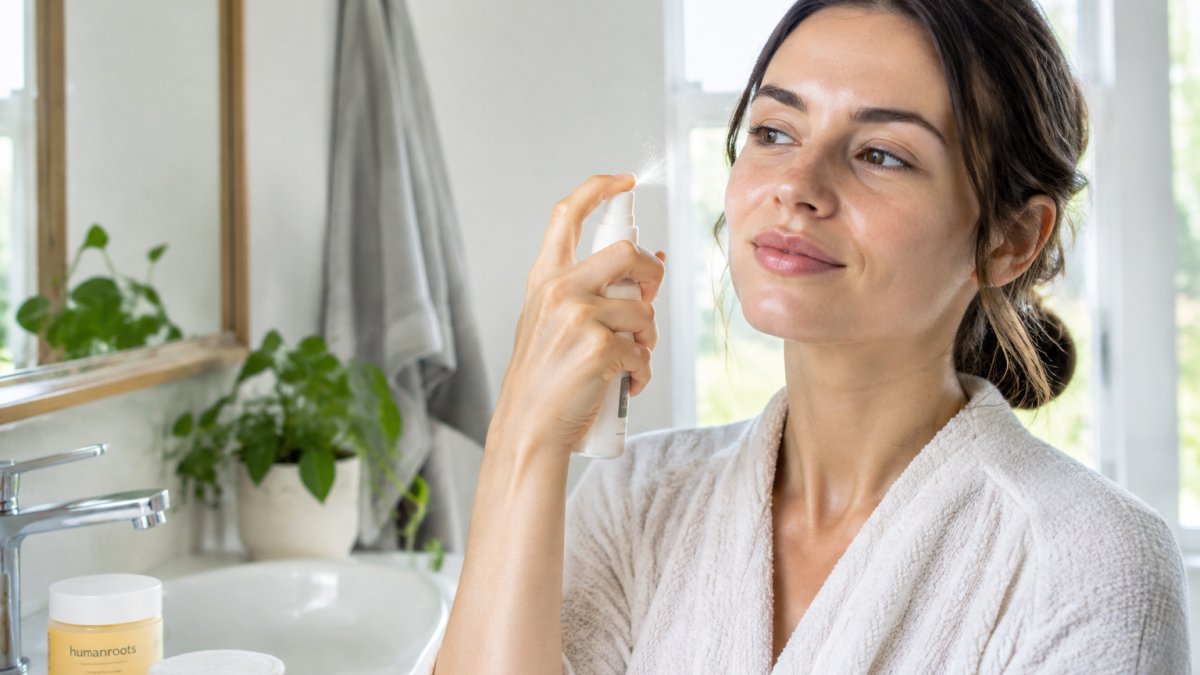
On the natural side, the workhorses are botanicals with astringent or soothing reputations, green tea, witch hazel (alcohol-free), tea tree, and clay. Learn how to treat hormonal breakouts naturally in a dedicated guide. Some people find these helpful for surface oil and redness, though essential oils are a common source of contact allergens.
Clinical acne formulas are often built around a few well-known actives, such as salicylic acid and benzoyl peroxide. They can sting or dry the skin.
A practical middle path: use a gentle, fragrance-free cleanser and a non-comedogenic moisturizer as your base, then add one active, natural or clinical, and give it four to six weeks. See which non-comedogenic products are safe alongside dark spot treatment. Avoid stacking multiple drying actives at once.
Watch out: if you use a clinical active like benzoyl peroxide or a retinoid, adding a botanical oil on top can increase irritation rather than soothe it, patch test on the jawline first.
Best for: oily or breakout-prone skin that wants a gentle daily routine built around one active at a time. Skip if: your acne is severe, cystic, or leaving scars, that is a conversation for a dermatologist, not a shelf.
How to Fade Dark Spots Naturally and Choose Your Routine
Dark spots, from sun, past breakouts, or hormonal shifts, form when melanin-producing cells get overstimulated and deposit extra pigment. Fading them is a patience game measured in weeks to months, and sun protection matters more than any single serum.
Some people use ingredients like kojic acid and turmeric to address the look of dark spots, while others turn to clinical options. Learn which natural home remedies have real support and what realistic results look like. Clinical options can carry more irritation risk, and some require medical supervision.
Here is where the "clean beauty" label deserves scrutiny. "Natural" and "clean" are often used as marketing terms, without a single agreed standard. What matters is the ingredient list, the active's concentration, and whether the formula has been tested for stability and safety. Get a deeper guide on what to look for in natural ingredients.
A routine that gives fading a fair chance: a gentle cleanser morning and night, one brightening product, a non-comedogenic moisturizer, and a broad-spectrum sunscreen of SPF 30 or higher every morning. Find out which exfoliant actually fades acne marks. Add the brightener every other night for two weeks, then nightly if tolerated. Photograph the spot in the same light every two weeks to judge progress honestly.
Watch out: layering a natural brightener like turmeric or kojic acid with a clinical retinoid or acid in the same step can cause stinging, alternate nights instead of stacking.
Best for: people with mild to moderate dark spots who want a simple, consistent routine. Skip if: a spot is new, changing shape, or darkening quickly, have a dermatologist look at it first.
Get started with humanroots and build a calmer, clearer routine with products that fit your life.
Frequently Asked Questions
What is the difference between natural and clinical skincare products?
Natural skincare usually centers on ingredients derived from plants, minerals or naturally occurring compounds, while clinical products are formulated around specific active ingredients tested for defined effects. Neither label guarantees gentleness or results. Natural does not automatically mean safer, since many natural ingredients can still trigger allergic reactions. Check the full ingredient list, look for fragrance-free and non-comedogenic labels if you break out easily, and patch test new products on a small area before using them on your whole face.
Are natural skincare products as effective as clinical products?
It depends on the goal and the formula. Some natural ingredients have research support for specific benefits, but published evidence comparing natural and clinical products directly is limited. For acne or uneven tone, consistency matters more than the label: give a product several weeks before judging it. If your concern is persistent or painful, a dermatologist can help you choose between approaches.
How long should I try a skincare product before deciding whether it works?
Most skincare routines need about four to six weeks of consistent daily use before you can judge results, and dark spots can take longer to fade. Use the same routine without adding new products during that window so you can tell what is working. Stop using a product and check with a dermatologist if you notice burning, swelling or spreading redness.
