

Which Exfoliant Actually Fades Acne Dark Spots?
Quick Summary
The best exfoliant for acne dark spots depends on your skin. AHAs like glycolic and lactic acid smooth the surface and even out tone, while BHAs like salicylic acid suit breakout-prone skin. Start gently with one product, use it consistently, and wear daily sunscreen, since acne dark spots often take several weeks to months to fade.
- AHAs work on the skin's surface, making them a direct choice for uneven tone without many active breakouts.
- BHAs such as salicylic acid travel into pores, which suits acne-prone or congested skin.
- Glycolic acid is the most studied AHA and the strongest of the common ones.
- Mandelic acid has a larger molecule and is the mildest AHA, a common pick for sensitive skin.
- Avoid layering an AHA and a BHA on day one, since that often causes irritation.
Table of Contents
- Why Acne Dark Spots Stick Around and What Exfoliation Can Do
- AHA vs. BHA for Acne Dark Spots: Which One Fits Your Skin
- How Often to Exfoliate Acne-Prone Skin Without Irritating It
- Best Exfoliant for Acne Dark Spots at Home: What to Look For
- Best Exfoliant for Acne Dark Spots Dermatologist Recommended: Setting Expectations and Protecting Your Skin
- Starting Your Exfoliation Routine With the Turmeric Kojic Acid Cleansing Pads
- Frequently Asked Questions
Last Updated: November 7, 2026
Dark spots left behind by acne can linger for months, and many people reach for whatever exfoliant is on sale. A better approach is to match the exfoliant to the kind of mark you have and to how sensitive your skin is. At humanroots, we have built our Turmeric Kojic Acid Cleansing Pads around that idea: a gentle, daily way to help your skin look brighter and more even over time. Below, we walk through how exfoliation works on acne-related discoloration, which acid suits which skin, and what a realistic routine looks like.

Why Acne Dark Spots Stick Around and What Exfoliation Can Do
Acne dark spots are a type of post-inflammatory hyperpigmentation. For more options beyond exfoliating, see our guide to natural ways to fade dark spots. A bibliographic review of chemical peel efficacy notes that pyruvic acid may lessen the visibility of acne, and that kojic acid may help fade dark spots and support a more even skin tone.
Exfoliation works best as one part of a routine, not a quick fix. Expect gradual changes over several weeks rather than overnight results.
AHA vs. BHA for Acne Dark Spots: Which One Fits Your Skin
The two main families of chemical exfoliants behave differently, and the right pick depends on whether your concern is mostly discoloration, mostly clogged pores, or both. Alpha hydroxy acids (AHAs) work on the surface of the skin. Beta hydroxy acids (BHAs), such as salicylic acid, can travel into pores, which is why they are often chosen for congested or breakout-prone skin. Ulta's guidance on salicylic-acid exfoliators describes these exfoliators as a common choice for acne-prone skin because they help unclog pores.
A quick way to think about it: AHAs are better at smoothing the surface and evening out tone, while BHAs are better at clearing what is inside the pore. If your dark marks sit on otherwise clear skin, an AHA is usually the more direct choice. If you are still breaking out, a BHA addresses the cause of new marks rather than just the mark itself.
When a BHA Makes More Sense
A BHA is usually the better starting point if your dark marks sit alongside clogged pores or active breakouts. Because it helps clear the pore lining, it can reduce the buildup that leads to new spots. Many people with oily or acne-prone skin tolerate a BHA well when they introduce it slowly. A wash-off BHA cleanser is gentler still and a reasonable first step if your skin is reactive.
When an AHA Makes More Sense
An AHA tends to suit skin that feels rough or looks uneven without many active breakouts. Natural Organic Skincare's product guide explains that glycolic acid may be better for surface roughness and uneven color, while salicylic acid is often more useful for clogged pores. Glycolic acid is the most studied AHA and the strongest of the common ones; lactic acid is gentler and often better tolerated; mandelic acid has a larger molecule and tends to be the mildest, which makes it a common pick for sensitive skin.
What About Gentler Options?
Not everyone needs an acid at all. Polyhydroxy acids (PHAs) such as gluconolactone exfoliate more slowly and are often better tolerated by sensitive skin. Enzymes (papain, bromelain) dissolve dead surface cells without acid and are a reasonable option for skin that stings easily.
Watch out: layering an AHA and a BHA in the same routine on day one is a common way to end up irritated. If redness shows up, a step-by-step guide to soothing facial redness can help you calm and protect your skin.
How Often to Exfoliate Acne-Prone Skin Without Irritating It
More exfoliation is not always better. Over-exfoliating can strip the skin barrier, leaving it red, stinging and more prone to inflammation, which can make dark marks worse. The goal is the least frequent use that still moves your skin forward, not the most your skin can tolerate.
A Simple Starting Schedule
Apply to dry skin after cleansing, wait a minute or two if the product stings, and always follow with moisturizer. If you use a pad or toner, one pass is enough, do not scrub.
Layering With the Rest of Your Routine
Order matters less than spacing. A common pattern is: cleanser, exfoliant, then any water-based serum, then moisturizer. If you also use a retinoid, do not apply both on the same night at first, alternate nights, or use the retinoid on the nights you skip the acid. Benzoyl peroxide and exfoliating acids can be drying together, so many people use benzoyl peroxide in the morning and the exfoliant at night.
Watch out: do not stack a scrub, an acid, and a retinoid in the same evening. That combination is a frequent cause of barrier irritation, and irritation itself can deepen discoloration.
Signs to Pull Back
Stop or reduce use if you notice persistent burning, tightness, new redness, or flaking that lasts more than a day or two. A brief tingle is normal; pain is not. If your skin feels raw, pause the exfoliant for a week and stick to cleanser, moisturizer, and sunscreen. Our recovery spray has no added fragrance.
What to Expect and How to Track It
Fading takes time, often several weeks to a few months for surface marks. Take a photo in the same light once a week so you can compare honestly; day-to-day mirror checks are misleading. If a mark has not budged after two to three months of consistent, gentle use, that is a signal to reassess rather than escalate. And keep up daily sunscreen: without it, sun exposure can make existing dark spots look darker and slower to fade, which undoes much of the work.
Best Exfoliant for Acne Dark Spots at Home: What to Look For
When you shop for an at-home exfoliant, focus on a few practical factors rather than marketing claims. Look for a clear list of active ingredients, a gentle formula that suits sensitive skin, and a product that fits a daily routine.
Here is a quick checklist to guide your choice:
- Active ingredient: Know whether it is an AHA or BHA and what it is meant to address.
- Irritation potential: Choose a gentler formula if your skin reacts easily. Our guide to choosing natural ingredients for acne-prone skin walks through how to judge ingredients for your skin.
- Routine fit: Pick something you can use consistently, not a high-maintenance step.
- Skin tone considerations: Strong exfoliation carries a higher risk of irritation-related darkening for some skin tones, so start cautiously.
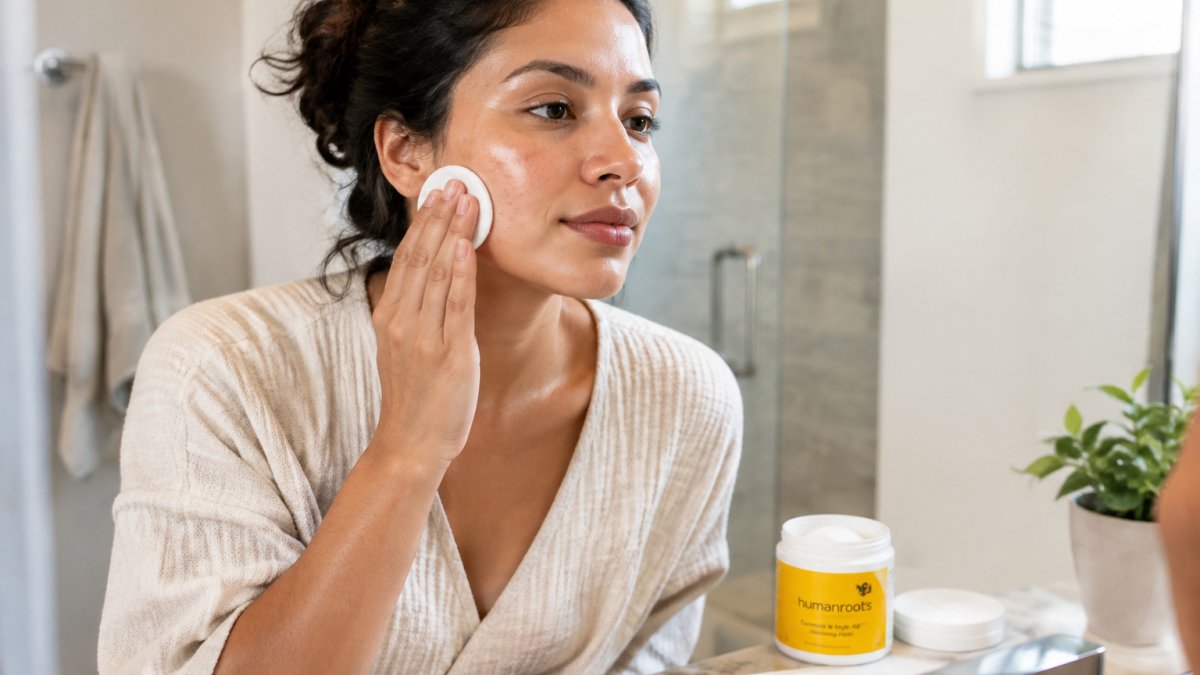
Our Turmeric Kojic Acid Cleansing Pads are designed to help brighten skin and support a smoother-looking complexion. They are priced at $34.99.
Best Exfoliant for Acne Dark Spots Dermatologist Recommended: Setting Expectations and Protecting Your Skin
Set realistic expectations. Fading dark spots takes time, often several weeks to months, and results depend on how deep the discoloration is. Protect your progress with daily sunscreen, since sun exposure can make existing dark spots look darker and slower to fade.
Starting Your Exfoliation Routine With the Turmeric Kojic Acid Cleansing Pads
If you are new to exfoliation, a simple routine works best. Many readers also find it helpful to read our guide on natural ways to fade dark spots for broader options.
Ready to start? Shop the Turmeric Kojic Acid Cleansing Pads and build a gentle routine you can keep up with.
Clearer-looking skin is a realistic goal with patience and a gentle approach. Shop the Turmeric Kojic Acid Cleansing Pads from humanroots and start a routine that fits your day.
Frequently Asked Questions
Which exfoliant is best for dark spots?
For most people with acne-related dark spots, a gentle chemical exfoliant is the more practical choice than a harsh scrub. Glycolic acid, an AHA, is often recommended for surface roughness and uneven color, while salicylic acid, a BHA, is more useful when clogged pores are part of the picture. Many people with acne-prone skin use both types at different times. Watch how your skin responds to any new exfoliant before increasing how often you use it. Results on dark spots build slowly, so judge progress over several weeks rather than days.
Will exfoliating get rid of dark spots?
Exfoliating can help fade dark spots over time by encouraging the skin to shed pigmented surface cells, but it does not erase them overnight. Strong exfoliation can backfire on some skin, since irritation can trigger more pigmentation. A gentle, consistent routine paired with daily sunscreen is the safer approach. If a spot is not improving after several months, it is worth asking a dermatologist about other options.
How often should you exfoliate acne-prone skin?
Many people with acne-prone skin find that adjusting how often they exfoliate, based on how their skin feels, works best. Signs you are doing too much include stinging, persistent redness, tightness, or new breakouts. If you notice any of these, cut back to once a week or pause until your skin calms down. Keeping your routine simple makes it easier to tell which product is helping and which is causing trouble. Avoid layering several exfoliating products on the same night.
Can exfoliating make acne dark spots worse?
It can, if you exfoliate too often or too aggressively. Irritated skin is more prone to post-inflammatory hyperpigmentation, which means the dark mark can get darker or last longer after a flare. Harsh scrubs and high-strength acids are the most common culprits. Choose gentler formulas, start slowly, and stop if your skin becomes red or sore. Daily sunscreen also matters, since sun exposure can deepen existing dark spots.
