

How to Soothe Facial Redness Naturally
Last Updated: October 30, 2026
Quick Summary
To soothe facial redness naturally, cleanse with a mild, fragrance-free cleanser using lukewarm water, then follow a simple barrier repair routine of hydrate, moisturize, and protect with daily sunscreen. Soothing ingredients like aloe vera, chamomile, oat extract, and panthenol help calm irritation, while niacinamide and azelaic acid reduce redness over time.
- Cleanse once in the morning and once at night, and pat skin dry instead of rubbing.
- Apply moisturizer to slightly damp skin, then seal it in with sunscreen each morning.
- Aloe vera, chamomile, green tea extract, and oat extract are common soothing choices for reactive skin.
- Hypochlorous acid is a naturally occurring molecule that helps calm irritation and supports the barrier.
- Redness from irritation or a damaged barrier often settles within a few weeks of gentle care.
Table of Contents
- Start With Gentle Cleansing to Calm Irritated Skin
- Build a Skin Barrier Repair Routine That Reduces Redness
- Natural Ingredients for Facial Redness That Actually Help
- How Long Does Facial Redness Last?
- How to Reduce Redness on Your Nose
- Frequently Asked Questions
Start With Gentle Cleansing to Calm Irritated Skin
If you want to know how to soothe facial redness naturally, start with the gentlest step: your cleanser. Many cases of everyday flushing and stinging trace back to harsh washing, not to a skin condition.
A 2024 review in the rosacea management literature notes that dermatologists favor gentle cleansers and calming moisturizers for reactive skin. That is the whole strategy in one line.
So swap foaming scrubs for a mild, fragrance-free cleanser. Use lukewarm water, not hot. Pat dry instead of rubbing.
- Cleanse once in the morning and once at night
- Skip physical scrubs and alcohol-based toners
- Avoid added fragrance and drying sulfates
- Never scrub at a flushed area to "calm" it
Watch out: over-washing strips the skin and makes redness worse, not better.
If dark spots sit alongside your redness, these natural ways to fade dark spots pair well with a gentle routine.
Build a Skin Barrier Repair Routine That Reduces Redness
A skin barrier repair routine is a short, repeatable set of steps that rebuilds the outer layer so redness has less room to flare. Keep it simple: cleanse, hydrate, moisturize, protect.
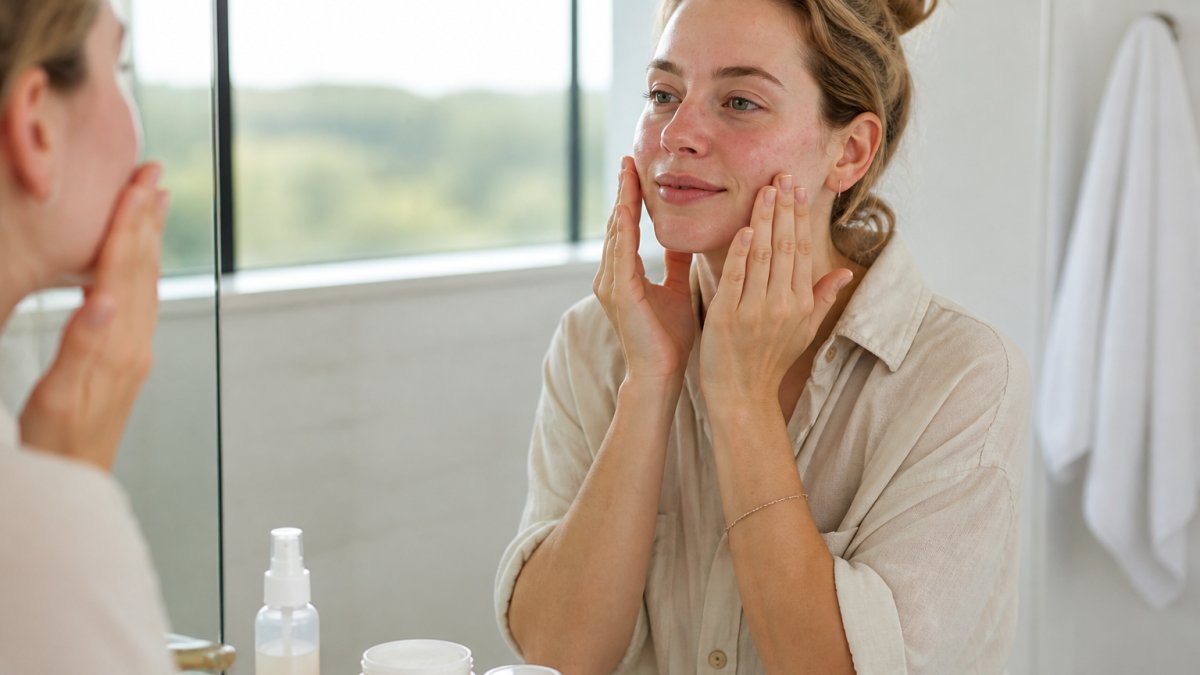
Order matters less than consistency. Apply moisturizer to slightly damp skin, then seal it in. Add a sunscreen every morning, since sun exposure is a common redness trigger.
- Hydrate: a hyaluronic acid or glycerin layer
- Moisturize: ceramides, panthenol, or oat to support the barrier
- Protect: daily broad-spectrum sunscreen
- Repeat: twice daily, no extra steps
New to barrier care? This guide to the skin barrier explains what it does and how to repair it.
Natural Ingredients for Facial Redness That Actually Help
Natural ingredients for facial redness work best when they calm inflammation and support the barrier, not when they promise a cure. A handful earn their place.
Aloe vera, chamomile, green tea extract, and oat extract are common soothing choices. Niacinamide and azelaic acid help with redness over time. Panthenol and licorice root show up in dermatologist-loved formulas, per that same 2024 rosacea review.
One ingredient worth knowing: hypochlorous acid. It is a naturally occurring molecule that helps calm irritation and supports the barrier. Our Recovery Spray is powered by it and is designed for daily use without residue.

- Soothing: aloe, chamomile, oat, panthenol
- Calming over time: niacinamide, azelaic acid, green tea
- Barrier support: plant oils, ceramides, hypochlorous acid
Curious which hypochlorous option fits reactive skin? This comparison of hypochlorous acid sprays for redness breaks it down.
Here is how the ingredients the article names break down by what they do.
| Ingredient | Best for | Key role |
|---|---|---|
| Aloe vera | Soothing | Common soothing choice |
| Chamomile | Soothing | Common soothing choice |
| Oat extract | Soothing | Common soothing choice |
| Panthenol | Soothing and barrier support | In dermatologist-loved formulas |
| Niacinamide | Calming over time | Helps with redness over time |
| Azelaic acid | Calming over time | Helps with redness over time |
| Green tea extract | Calming over time | Common soothing choice |
| Hypochlorous acid | Barrier support | Naturally occurring molecule that calms irritation |
How Long Does Facial Redness Last?
Facial redness from irritation or a damaged barrier often settles within a few weeks of gentle care. Redness tied to rosacea or acne tends to come and go with triggers and needs ongoing management.
Track what you use and when flushing appears. A simple notes app works. Patterns show up fast.
How to Reduce Redness on Your Nose
Nose redness usually responds to the same basics: gentle cleansing, barrier support, and sun protection. Avoid nose strips and harsh exfoliants, which irritate the area further.
If redness on your nose persists, spreads, or comes with swelling, have a doctor look at it.
Frequently Asked Questions
How can I soothe facial redness naturally?
Start with a gentle cleanser that won't strip your skin, then follow with a calming moisturizer to support your skin barrier. Look for soothing ingredients like aloe vera, chamomile, green tea extract, and oat extract. Avoid harsh products with added fragrance or alcohol. A hypochlorous acid mist, like Humanroots The Recovery Spray ($19.99), can help calm irritation and support the skin barrier between steps. Consistency matters more than a complicated routine.
How long does facial redness take to calm down?
It depends on the cause. Mild irritation from a new product or weather change often settles within a few days to a week once you remove the trigger. Redness linked to a damaged skin barrier typically improves over two to four weeks of gentle care. If redness persists beyond a month or comes with swelling, warmth, or pain, see a dermatologist to rule out rosacea or another condition that needs medical evaluation.
When should I seek professional advice about facial redness?
See a dermatologist if redness is persistent, spreads, or comes with bumps, swelling, or a burning feeling. Also get help if over-the-counter gentle skincare hasn't helped after four to six weeks, or if redness appears only on one side of your face. A doctor can distinguish between rosacea, acne-related redness, and other causes so you get the right treatment instead of guessing.
Redness is stubborn, and guessing at triggers wastes weeks. humanroots makes the daily part easier with gentle, non-comedogenic formulas, including our fragrance-free Recovery Spray that calms stressed skin and supports the barrier. Get started with humanroots and give reactive skin the calm, steady care it needs.
