

What Is the Best Hypochlorous Acid Spray for Redness?
Last Updated: October 29, 2026
Quick Summary
The best hypochlorous acid spray for facial redness is one with a stable formulation, a skin-friendly pH, and no unnecessary additives, such as our fragrance-free humanroots Recovery Spray. Mist it onto clean skin from six to eight inches away, let it dry fully, then follow with moisturizer.
- Look for a fragrance-free, preservative-free hypochlorous acid spray to reduce ingredients that can trigger sensitivity.
- Mist from about six to eight inches away, let it dry for 30 to 60 seconds, then moisturize.
- Start with once a day for the first week before adding a second application.
- Keep the bottle cool, dark, and capped, and replace an opened bottle within a few months.
- See a dermatologist if redness is persistent, painful, spreading, or paired with swelling that doesn't settle.
Table of Contents
- What Makes a Hypochlorous Acid Spray Worth Using on Redness?
- Hypochlorous Acid Benefits for Skin: Calming Redness and Irritation
- How to Use Hypochlorous Acid Spray in Your Daily Routine
- Is Hypochlorous Acid Safe for Daily Use on Sensitive Skin?
- Redness That Needs a Dermatologist, Not a Spray
- Adding the humanroots Recovery Spray to Your Routine
- Frequently Asked Questions
What Makes a Hypochlorous Acid Spray Worth Using on Redness?
A hypochlorous acid spray is a topical solution of a molecule your immune system already makes. When you're choosing one, look for a stable formulation, a skin-friendly pH, and no unnecessary additives. At humanroots, we build our Recovery Spray around exactly that idea.
Two bottles can both say "hypochlorous acid" and feel quite different on reactive skin, so it helps to know what to look for.
Concentration, pH, and Formulation: What Actually Matters
Three things decide whether a facial spray soothes or stings: concentration, pH, and how stable the solution stays in the bottle.
- Concentration: Enough to be effective, not so much that sensitive skin reacts.
- pH: A solution close to your skin's natural range tends to feel gentler on irritated skin.
- Stability: Hypochlorous acid loses potency when exposed to light and air, so packaging and shelf life matter.
A fragrance-free, preservative-free formula reduces the number of ingredients that can trigger sensitivity. That is the trade-off worth paying attention to, not the marketing copy on the front of the bottle.
Hypochlorous Acid Benefits for Skin: Calming Redness and Irritation
Hypochlorous acid is best thought of as everyday support rather than a rescue. Our Recovery Spray is formulated to help calm irritation and support the skin barrier.
A 2025 clinical review of hypochlorous acid in dermatology described a small case series in which twice-daily use was associated with symptom relief within days. If you want to understand the barrier this mist supports, our guide to what a skin barrier is and how to care for it breaks it down.
What the Evidence Says (and What It Doesn't)
The evidence supports realistic expectations. Hypochlorous acid may help soothe redness, itching, and mild swelling linked to irritation. It is not a cure-all, and Wirecutter's coverage of hypochlorous acid mists cautions against treating these sprays as a fix for everything.
Expecting a facial mist to erase persistent redness overnight can lead to over-applying, which may irritate sensitive skin.
How to Use Hypochlorous Acid Spray in Your Daily Routine
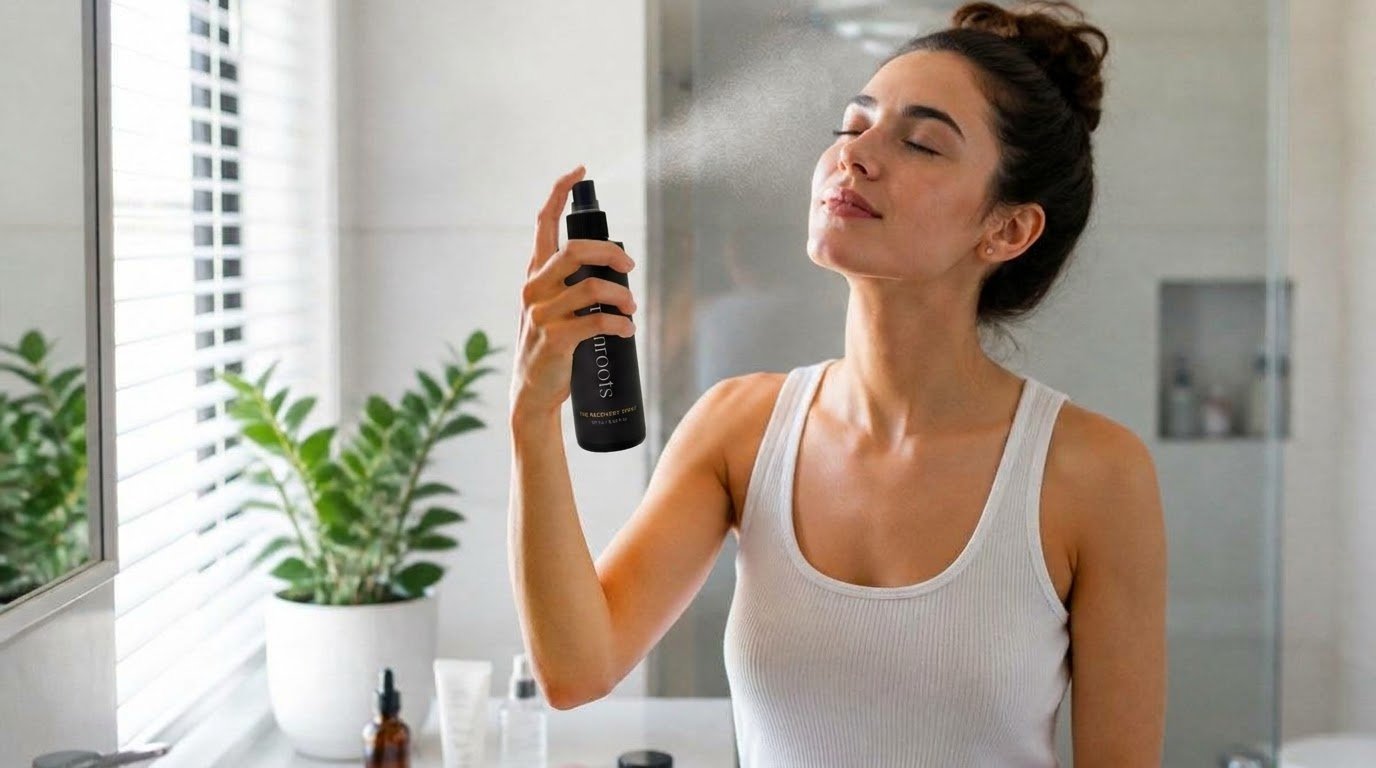
To use hypochlorous acid spray, mist it onto clean skin from about six to eight inches away, let it dry fully, and follow with moisturizer. Keep it simple: one or two passes, morning and after workouts, is enough for most routines. A gentle way to start is with once a day for the first week, so you can see how your skin responds before adding a second application.
Where It Fits in Your Routine
Timing matters more than strict order. A simple pattern is:
- Cleanse with a gentle, non-stripping cleanser and pat dry.
- Mist the spray while skin is still slightly damp.
- Let it dry for about 30 to 60 seconds, don't rush to the next step.
- Moisturize to seal in hydration and support the barrier.
- Apply sunscreen in the morning as your final step.
If you use active ingredients like retinoids, exfoliating acids, or vitamin C, a practical approach is to apply the spray first, let it dry, and then layer your active. Some people prefer to alternate, spray in the morning, active at night, to avoid overloading reactive skin. There is no single right answer, so watch how your skin feels and adjust.
How Often to Apply
- Morning: after cleansing, before moisturizer and sunscreen.
- Post-workout: mist over clean skin to rinse away sweat and heat.
- Evening: optional, especially on days when skin feels flushed or stressed.
Two applications a day is a common starting point for many people. If your skin is very reactive, begin with one and build up. More is not always better, since over-applying can leave skin feeling tight or irritated.
Use Around the Eyes and on Different Facial Areas
The eye area needs extra care. Keep your eyes closed and mist from a slightly greater distance, or spray onto a cotton pad first and gently pat around the area.
For broken skin, post-procedure skin, or areas that are bleeding or oozing, check with your clinician before use. A spray is not a substitute for medical wound care.
A few habits that make it easier to stick with:
- Spray on clean skin, before heavier products.
- Use it post-workout to rinse away sweat and irritation.
- Let it dry fully before makeup.
For the full post-sweat sequence, see our guide on how to use hypochlorous acid mist after workouts.
Is Hypochlorous Acid Safe for Daily Use on Sensitive Skin?
Many people with sensitive skin use hypochlorous acid sprays day to day, especially fragrance-free formulas. It is a molecule your immune system naturally produces. That said, "generally safe" is not the same as "right for everyone," so a patch test on your inner arm is still the smart first step if your skin is highly reactive.
Who It Suits, and Who Should Be Cautious
Skin concern |
How the spray helps |
What to watch |
|---|---|---|
Redness and irritation |
Calms and soothes |
Stop if stinging persists |
Acne-prone skin |
Supports cleaning blemishes |
Pair with gentle cleansing |
Post-workout flush |
Rinses sweat and heat |
Apply to clean skin |
Compromised barrier |
Supports natural healing |
Follow with moisturizer |
Very dry or eczema-prone skin |
May soothe mild irritation |
Patch test first; avoid if skin is cracked or weeping |
Sensitive or reactive skin |
Fragrance-free formulas are gentler |
Introduce one product at a time |
If you have a known allergy to chlorine or chlorine-based products, talk to a clinician before using hypochlorous acid. People with very compromised skin should also check first.
Side Effects to Watch For
Mild temporary tingling can happen, especially on the first few uses. Other things to watch for:
- Stinging that lingers more than a minute or two.
- Increased redness right after application.
- Dryness or tightness that wasn't there before.
If any of these happen, stop using the spray and let your skin settle. If irritation worsens or doesn't improve within a few days, discontinue use and check with a clinician.
Storage, Shelf Life, and Contamination
How you store a hypochlorous acid spray matters as much as how you use it.
- Keep it cool and dark. Store away from direct sunlight and steamy bathrooms when possible.
- Keep the cap on when not in use, and don't leave the bottle open.
- Check the expiration date. Most formulas have a defined shelf life; once opened, use within the window on the label.
A common pattern is to replace an opened bottle within a few months of first use, even if the printed date is later. If you use the spray infrequently, a smaller bottle may be the better choice so you aren't storing an open product for a long time.
When to Stop and Ask
Safety also means knowing when a spray isn't the right tool. If redness is persistent, painful, spreading, or paired with swelling that doesn't settle, stop using the spray and see a clinician. A spray is not intended to diagnose or treat a medical condition.
Redness That Needs a Dermatologist, Not a Spray
Some redness is not a skincare problem, and a mist may not address it. See a dermatologist if redness is persistent, painful, spreading, or paired with swelling that does not settle.
That includes redness after a procedure, sudden flushing with fever, or patches that keep returning. If you are unsure whether your redness is routine irritation, reach out to our team and we will point you in the right direction.
Adding the humanroots Recovery Spray to Your Routine
For many people, our humanroots Recovery Spray is a good fit. It is a lightweight, fast-absorbing skin mist powered by hypochlorous acid, designed for daily use without residue.
What makes it worth the switch:
- No added fragrance, which matters for reactive skin.
- Non-comedogenic, formulated not to clog pores.
- Barrier support designed for stressed, irritated skin.
One customer, Sarah M., put it this way: "After a couple weeks, my skin looked less reactive, breakouts didn't flare the same, and everything just felt more calm and under control."
You can shop the Recovery Spray and see the full ingredient list for yourself.

Frequently Asked Questions
Does hypochlorous acid actually help with facial redness?
It can help with redness tied to irritation and surface bacteria, but it is not a treatment for every kind of redness. Some research on hypochlorous acid is encouraging, but studies are limited, so treat a hypochlorous acid spray as a calming step in your routine rather than a cure. Redness from rosacea, eczema, or allergies needs a dermatologist's input.
How often should I use a hypochlorous acid spray on my face?
Once or twice a day works for most people, and many use it after cleansing and after workouts. Many people use it once or twice a day as a starting rhythm. Start with one application daily for the first week to see how your skin responds, then add a second if it feels comfortable. Keep the bottle capped and store it away from direct sunlight so the solution stays stable.
Is hypochlorous acid safe for sensitive or acne-prone skin?
Hypochlorous acid is a molecule your body naturally produces. That said, sensitive skin still deserves a patch test: spray a small area on your inner arm or jawline and wait 24 hours before using it on your full face. Choose a fragrance-free, non-comedogenic formula if you are acne-prone, since added fragrance is a common trigger for irritation. Stop using it if you notice stinging, peeling, or worsening redness.
Can hypochlorous acid replace my toner?
It can take the place of a toner step for many routines, since it is a lightweight liquid you apply after cleansing. It does not exfoliate or hydrate the way some toners do, so if your skin depends on those benefits, keep them and add the spray alongside. A simple order: cleanse, mist, then follow with moisturizer and sunscreen. That keeps the routine short while still supporting the skin barrier.
Calming redness takes the right formula and a routine you will actually keep. humanroots makes that easier with a fragrance-free, non-comedogenic mist that supports your skin barrier and fits into a busy day. Get started with humanroots and give reactive skin the calm, consistent care it has been asking for.
