

How to Treat Hormonal Acne Naturally and Calm Your Skin
Last Updated: November 10, 2026
Quick Summary
To treat hormonal acne naturally, build a simple routine around gentle cleansing, non-comedogenic moisturizer, and daily sunscreen, then add one active like azelaic acid slowly. Support it with a diet that steadies blood sugar, and give each change six to eight weeks before judging results.
- Hormonal breakouts tend to be deep, tender spots along the jawline, chin, and lower cheeks.
- Introduce one new product or diet change at a time and hold it for at least four weeks.
- Pair carbs with protein or fat to help keep blood sugar steady.
- If you suspect dairy, cut one type for six to eight weeks rather than all dairy at once.
- See a healthcare professional if there is no improvement after eight to twelve weeks of consistent care.
Table of Contents
- Identifying Hormonal Acne and Its Root Causes
- Building a Hormonal Acne Diet
- How to Treat Hormonal Acne Naturally at Home Diet and Skincare
- How to Treat Hormonal Acne Without Medication
- How Long Does It Take for Natural Acne Treatments to Work
- Finding Gentle Skincare That Supports Your Skin Barrier
- Frequently Asked Questions
Identifying Hormonal Acne and Its Root Causes
Hormonal acne is a type of breakout driven by shifts in androgen levels that increase oil production and clog pores. Many readers are doing everything "right" and still breaking out along the jaw and chin. That pattern is the clue.
The research here is thin, so let's be honest about what we know. A clinical review of adult female acne published in 2019 examined azelaic acid 20% used twice daily in a study of 241 women, alone or with other treatments (adult female acne clinical practice guide). It is a real treatment option, but it is not a quick fix.
How Hormonal Acne Differs from Other Breakouts
Regular breakouts show up wherever oil and dead skin meet. Hormonal breakouts follow a pattern.
- Location: deep, tender spots along the jawline, chin, and lower cheeks
- Timing: flare-ups that track your menstrual cycle
- Feel: painful lumps under the skin rather than surface whiteheads
- Scarring: a higher chance of leaving dark marks behind
If that sounds familiar, you are likely dealing with a hormonal pattern. If you are curious about a natural product aimed at supporting hormonal balance, you can explore our wild yam cream.
Building a Hormonal Acne Diet
No single food causes hormonal acne. But a hormonal acne diet built around steady blood sugar and whole foods is one of the most practical levers you control. The goal is not a strict elimination plan, it is a set of swaps you can keep for months, because skin changes slowly and consistency matters more than perfection.
Why Blood Sugar Is the Main Lever
When you eat fast-digesting carbs and sugary drinks, blood sugar rises quickly and insulin follows. Insulin can push oil production up and may increase levels of a hormone called IGF-1, which is linked to more sebum and more clogged pores. That is the mechanism behind most diet advice for hormonal acne, and it is why the same few recommendations keep showing up.
Foods That May Help and Foods to Limit
The evidence for specific foods is mixed, so treat this as a starting point, not a promise.
| Category | Examples | Why It May Help or Hurt | Evidence Strength |
|---|---|---|---|
| Eat more | Cruciferous vegetables, leafy greens | Support hormone balance and add fiber | Preliminary |
| Eat more | Whole grains, non-starchy vegetables | Steady blood sugar | Moderate for blood sugar, limited for acne |
| Eat more | Omega-3 fatty acids (salmon, walnuts, flax), probiotic foods | May calm inflammation | Mixed |
| Limit | Sugary drinks and refined carbs | Spike insulin and oil | Moderate |
| Limit | Some dairy, especially skim milk (pubmed.ncbi.nlm.nih.gov) | Linked to breakouts in some people | Mixed |
A few practical swaps that tend to stick:
- Replace soda or sweetened coffee drinks with sparkling water or unsweetened tea.
- Pair carbs with protein or fat, an apple with nut butter instead of an apple alone.
- Choose whole grains over white bread and white rice most days.
- If you suspect dairy, try cutting one type (for example, skim milk) for six to eight weeks rather than removing all dairy at once.
Watch out: cutting entire food groups overnight rarely sticks, and removing dairy without a plan can leave you short on calcium and protein. Change one thing at a time and give it at least six weeks before judging results.
How to Run a Diet Experiment
Treat diet changes like a small experiment rather than a lifestyle overhaul.
- Pick one change, say, swapping sugary drinks for unsweetened options.
- Keep everything else the same for six to eight weeks.
- Log breakouts weekly using a simple scale (clear, mild, moderate, severe).
- Review at the end and keep the change only if you see a clear difference.
This approach is what most guides skip. It gives you a realistic way to tell whether a food change is actually helping, instead of guessing.
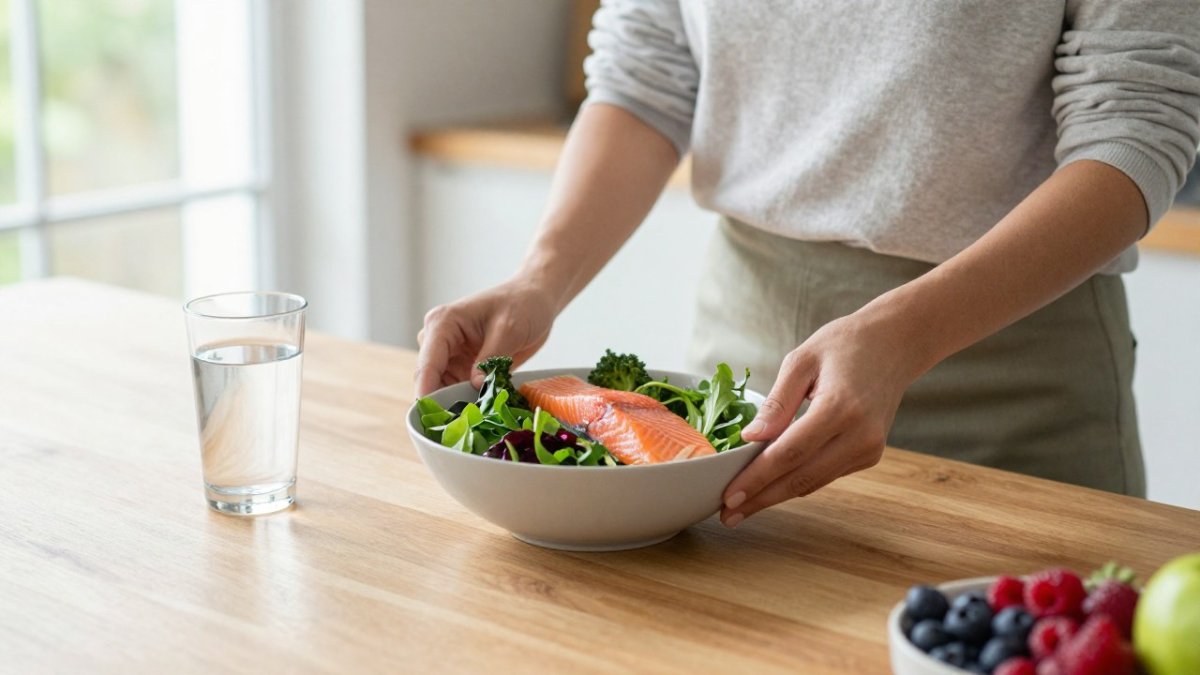
How to Treat Hormonal Acne Naturally at Home Diet and Skincare
Learning how to treat hormonal acne naturally at home comes down to a simple routine you will actually keep. Skip the ten-step shelf clutter. Introducing one change at a time helps you tell what is working, and a clear plan for measuring progress helps you know when to get help.
A Week-by-Week Plan You Can Actually Follow
This is a realistic eight-week sequence. Adjust the pace to your skin, but keep the order.
Weeks 1-2: Build the base.
- Cleanse gently twice a day with a mild, non-comedogenic cleanser. Avoid scrubbing.
- Moisturize even if you are oily, dry skin triggers more oil.
- Apply sunscreen every morning. This is the single best way to prevent dark marks from lingering.
- Start a simple log: date, breakout severity, and any new product.
Weeks 3-4: Add one active.
- Introduce one treatment, such as a low-strength alpha hydroxy acid, two to three nights a week.
- Apply it to the whole area where you break out, not just the spots.
- Watch for stinging or peeling and cut back if it appears.
Weeks 5-6: Adjust diet.
- Pick one dietary swap from the diet section and hold it steady.
- Keep skincare unchanged so you can isolate what is helping.
Weeks 7-8: Review and decide.
- Compare your log to week one. If breakouts are clearly down, keep going.
- If nothing has changed, change one variable, not all of them.
Product Types That Tend to Help
- Cleanser: gentle, fragrance-free, non-comedogenic.
- Active: low-strength alpha hydroxy acid or azelaic acid; introduce slowly.
- Moisturizer: lightweight, non-comedogenic, fragrance-free.
- Sunscreen: broad-spectrum, non-comedogenic, SPF 30 or higher.
If you are weighing natural ingredients, our guide on choosing natural ingredients for acne-prone skin walks through what to look for.
How to Track Progress and When to Change Course
A simple log beats guesswork. Note breakout severity weekly, any new products, and where you are in your cycle. Review every four weeks. If you see no improvement after eight to twelve weeks of consistent care, or if you develop deep, painful lumps or scarring, that is a signal to see a healthcare professional rather than keep adding products.
Watch out: adding several new products at once makes it impossible to know what helped and what irritated your skin. Introduce one change at a time and give each at least four weeks.
How to Treat Hormonal Acne Without Medication
How to treat hormonal acne without medication starts with lifestyle basics before products. Sleep hygiene and stress management are not fluffy extras. Poor sleep and high stress both push oil production up.
- Aim for consistent sleep and wake times
- Move your body most days
- Try tea tree oil or green tea topicals, but grade the evidence low
- Choose fragrance-free products if your skin reacts easily
What most guides miss is that natural remedies are not proven treatments. Healthline notes that tea tree oil, alpha hydroxy acids, and topical green tea have limited and mixed research support (Healthline on hormonal acne remedies). Use them as support, not cures.
If you want to know which fragrance-free options suit breakout-prone skin, read our guide on fragrance-free skincare for breakouts.
How Long Does It Take for Natural Acne Treatments to Work
Skin turnover is slow, and hormonal cycles add noise, so natural acne treatments usually take several weeks of consistent care to show results.
One humanroots customer, Sarah M., put it plainly: "After a couple weeks, my skin looked less reactive, breakouts didn't flare the same, and everything just felt more calm and under control."
Finding Gentle Skincare That Supports Your Skin Barrier
A strong skin barrier is the foundation every natural acne routine rests on. When the barrier is compromised, moisture escapes and irritants get in, which means more redness and more breakouts.
Our approach at humanroots is simple: non-comedogenic formulas, no added fragrance in our recovery spray, and daily-use products that calm stressed skin.
If you want to understand the barrier itself, our complete guide to repairing your skin barrier explains the warning signs. And if you need a moisturizer for acne-prone, sensitive skin, we have a pick for that.
Calming hormonal acne naturally takes patience and the right support, not a shelf full of harsh products. At humanroots, we build gentle, non-comedogenic formulas that support your skin barrier, calm irritation, and help fade dark spots over time.
Frequently Asked Questions
How do I get rid of hormonal acne fast?
There is no overnight fix for hormonal acne, and anything promising one is overselling. The fastest realistic path combines a few habits: wash with a gentle cleanser, apply a non-comedogenic topical treatment, avoid picking at breakouts, and keep your hands off your jawline and chin. Reducing high-glycemic foods and added sugar can help calm flare-ups over a few weeks. If a cyst is painful, a warm compress and a spot treatment with salicylic acid may ease it. For persistent or painful cysts, a dermatologist can offer faster prescription options.
Can you treat hormonal acne without medication?
Many people manage mild to moderate hormonal acne without medication by focusing on diet, gentle skincare, stress management, and sleep. A low-glycemic diet, fewer dairy and sugar-heavy foods, and a barrier-supporting routine with non-comedogenic products can reduce flare-ups over time. However, natural approaches have limits. If you have deep, painful cysts, scarring, or acne that is not improving after a few months, a dermatologist can discuss prescription options like spironolactone or topical retinoids. Natural care works best alongside professional guidance when needed.
How long does it take for natural acne treatments to work?
Most natural acne treatments need several weeks of consistent use before you see meaningful change. Skin cell turnover takes roughly 28 days, so a new routine needs time to show results. Dietary changes may take a bit longer, often six to twelve weeks, to visibly affect breakouts. Track your skin weekly with photos so you can spot gradual improvement. If nothing has changed after three months of steady effort, it may be time to adjust your approach or see a dermatologist.
Which skincare ingredients may help with hormonal acne?
Look for ingredients that calm inflammation and keep pores clear without stripping your skin. Salicylic acid, alpha hydroxy acids, and azelaic acid are common topical options. Tea tree oil, green tea, and other natural ingredients have limited and mixed research support, so treat them as supportive rather than proven cures. Always patch test and choose non-comedogenic, fragrance-free formulas.
