

Which Fragrance-Free Skincare Works for Breakouts?
Last Updated: November 1, 2026
Quick Summary
Fragrance-free skincare is a sensible starting point for breakout-prone skin, since added fragrance is one of the most common reasons sensitive skin gets irritated. Check the ingredient list for parfum, fragrance and essential oils rather than trusting front-label claims like hypoallergenic or natural. Build a short routine with a gentle cleanser, a calming step, a lightweight moisturizer and sunscreen, and add one product at a time.
- Look for "fragrance-free" rather than "unscented," since unscented can still contain masking fragrance.
- Check labels for parfum, fragrance and essential oils, which can irritate sensitive skin.
- Patch test new products on a small area like the jawline for three to five days.
- Add one new product every two to three weeks so you can tell what helps or irritates.
- Start exfoliating pads two to three times per week, not nightly, if your skin is already irritated.
Table of Contents
- Why Fragrance-Free Matters When Your Skin Is Breaking Out
- What Fragrance-Free Actually Means on a Label
- Skincare Ingredients for Breakouts That Suit Sensitive Skin
- The Best Cleanser for Breakout-Prone Skin
- Fragrance-Free Acne Routine Picks: Cleansing Pads and a Calming Spray
- How to Build a Skincare Routine for Acne-Prone Skin
- Patch Testing and Troubleshooting Irritation Before You Commit
- Choosing Your First Fragrance-Free Breakout Routine
- Frequently Asked Questions
Breakouts make you want to scrub, swap, and start over every week. Fragrance-free skincare gives you a calmer place to start, because added scent is one of the most common reasons sensitive skin gets irritated. Added fragrance is one of the most common reasons sensitive skin gets irritated, so removing it is a sensible first move. This guide from humanroots walks through what to look for, which ingredients suit reactive skin, and how to build a simple routine you can actually keep up with.
Why Fragrance-Free Matters When Your Skin Is Breaking Out
When your skin is already inflamed, every extra irritant makes the problem harder to read. Fragrance is an easy irritant to remove, and removing it helps you tell whether a product is working or simply stinging.
A fragrance-free formula is not automatically a good one, though. Fragrance-free is a starting filter, not a guarantee of results. Use it to narrow your options, then judge each product by how your skin responds over several weeks.
What Fragrance-Free Actually Means on a Label
Fragrance-free and unscented sound alike, but they are not always the same thing. "Unscented" can mean a masking fragrance has been added to cover up the smell of other ingredients (the FDA). "Fragrance-free" means no fragrance has been added. Check the ingredient list for "parfum" or "fragrance" and for essential oils, which can also irritate sensitive skin (the American Academy of Dermatology).
Labels such as "hypoallergenic" and "natural" are marketing terms, not proof of performance. Because these beauty-branding terms do not always match the evidence behind them, read the ingredient list rather than the front of the bottle.
Skincare Ingredients for Breakouts That Suit Sensitive Skin
Look for gentle, well-studied actives rather than harsh scrubs. A review in PubMed Central describes a combination of adapalene 0.3% and benzoyl peroxide 2.5% as safe and effective for treating acne vulgaris in individuals, though anything prescription-strength should be discussed with a dermatologist first. For everyday products, expert consensus on cleansers for acne-prone skin recommends non-irritating, non-comedogenic, and alcohol-free formulas.
Hypochlorous acid is another ingredient worth knowing, and it is the ingredient behind The Recovery Spray. Read our guide to the best hypochlorous acid spray for facial redness to learn how it fits a sensitive-skin routine.
The Best Cleanser for Breakout-Prone Skin
Your cleanser does the most work every day, so choose one that removes buildup without stripping your skin. Exfoliating cleansing pads can be a convenient option, but use them gently and not every night if your skin is already irritated.
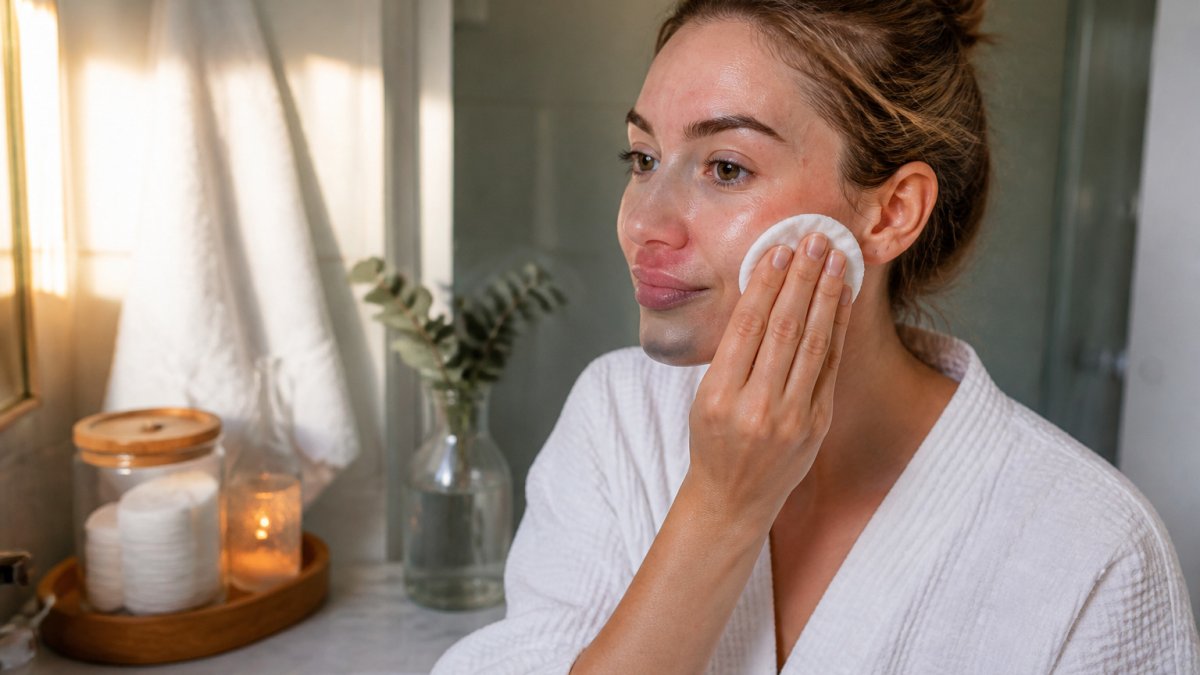
Our pick for breakout-prone skin is the Turmeric Kojic Acid Cleansing Pads at $34.99. They are designed to gently exfoliate and help brighten the look of the skin. Pair them with a calming step after cleansing, and watch how your skin responds over two to three weeks.
Explore the Turmeric Kojic Acid Cleansing Pads

Fragrance-Free Acne Routine Picks: Cleansing Pads and a Calming Spray
If you want a simple two-step routine, the Clear Skin Duo at $49.48 pairs the cleansing pads with The Recovery Spray. The spray is powered by hypochlorous acid and is designed to calm irritation and support the skin barrier. It is a lightweight mist that is designed for daily use without residue.
On its own, The Recovery Spray is priced at $19.99. Use it after cleansing or whenever your skin feels tight or reactive.
See how the Clear Skin Duo works as a two-step routine and check out The Recovery Spray

Here is how the two picks compare at a glance.
| Product | Price | Role in routine |
|---|---|---|
| Turmeric Kojic Acid Cleansing Pads | $34.99 | Gentle exfoliating cleanse |
| The Recovery Spray | $19.99 | Calming step after cleansing |
| Clear Skin Duo | $49.48 | Pads and spray as two steps |
How to Build a Skincare Routine for Acne-Prone Skin
A breakout routine is easier to stick with when it is short and you change one thing at a time. If you are new to the idea, learn what the skin barrier is and why it matters before choosing gentle products. A fragrance-free routine for breakout-prone skin should be short, predictable, and built in stages.
The basic order, morning and evening
A simple framework that works for most people:
Morning
- Gentle cleanser (or just rinse with lukewarm water if your skin is dry or tight in the morning)
- Calming step, such as a hypochlorous acid mist
- Lightweight, fragrance-free moisturizer
- Sunscreen, this is the step people skip, and it matters most when you are using anything exfoliating
Evening
- Gentle cleanser to remove the day's buildup and sunscreen
- Treatment step (exfoliating pads or a leave-on active), used only as often as your skin tolerates
- Calming step
- Moisturizer
That is it. If your skin is oily, you may not need a heavy moisturizer at night, a lightweight lotion is usually enough. If it is dry or tight after cleansing, do not skip moisturizer, even if you are worried about clogged pores.
How often to use each step
- Cleanser: once or twice daily. If your skin stings or feels tight after washing, you are over-cleansing or using something too harsh.
- Exfoliating pads: start two to three times per week, not nightly. Build up only if your skin stays calm for a couple of weeks.
- Calming mist: as often as needed, after cleansing, after a workout, or whenever skin feels reactive.
- Moisturizer: every morning and evening.
- Sunscreen: every morning, reapplied if you are outside for long stretches.
Introduce one product at a time
The single most useful habit is to add one new product every two to three weeks. That gives you a clean read on whether it helps or irritates. If you start a cleanser, a pad, and a mist in the same week and your skin flares, you have no way to know which one is responsible.
A practical sequence for a first routine:
- Weeks 1-3: gentle cleanser plus moisturizer and sunscreen only. Let your skin settle.
- Weeks 4-6: add the calming mist after cleansing.
- Weeks 7-9: add exfoliating pads two to three times per week.
What to leave out
Skip anything that combines several actives in one step, physical scrubs with rough particles, and toners with high alcohol content. None of these are necessary for a breakout routine, and each adds irritation risk without adding much benefit. A short routine you actually follow beats a ten-step routine you abandon in a week.
Patch Testing and Troubleshooting Irritation Before You Commit
A new product can cause a reaction in two very different ways, and telling them apart is the difference between quitting something that would have worked and sticking with something that is making things worse.
How to patch test properly
A patch test is not a one-time dab. A workable method:
- Pick a small area, the jawline, the side of the neck, or behind the ear. Use the same spot each time.
- Apply a small amount of the product once daily for three to five days.
- Watch for stinging, redness, itching, or swelling. Stop immediately if you see swelling, hives, or blistering.
- If the area stays calm, move to a larger area, one cheek, for example, for another few days before using it on your whole face.
This is slower than most people want, but it can help you catch a reaction before it covers your face.
Irritation vs. purging vs. worsening acne
These three look similar and mean very different things:
- Irritation usually shows up as stinging, burning, redness, or flaking within hours to a few days of starting a product. It often appears in areas where you applied the product, not just where you normally break out. The fix is to stop, simplify, and reintroduce later or not at all.
- Purging is a temporary increase in small bumps or blackheads in the areas where you already break out, typically in the first few weeks of starting an exfoliating active. The fix is to keep going at a gentle frequency.
- Worsening acne means new, deeper, or painful spots, often in new areas, that do not improve after several weeks. The fix is to stop the product and consider seeing a dermatologist.
A simple troubleshooting checklist
When your skin flares, work through these questions before changing your whole routine:
- Did I add anything new in the last two weeks? If yes, that is the first suspect. Pause it and see if things settle.
- Did I increase how often I use an active? More frequent use is a common cause of irritation.
- Did I change my cleanser, moisturizer, or sunscreen? These are easy to overlook because they feel 'basic.'
- Is the flare in the same spots as usual, or new ones? Same spots with small bumps often points to purging; new spots or deep painful ones point to irritation or worsening acne.
- Is there stinging or burning? That leans irritation, not purging.
When to see a dermatologist
If a flare does not settle after two to three weeks of simplifying your routine, if you develop deep or painful spots, or if you scar easily, it is worth seeing a dermatologist. Acne can be stubborn, and a dermatologist can recommend options beyond over-the-counter skincare. Bring a list of the products you have used and how your skin responded, that history makes the visit far more useful.
Choosing Your First Fragrance-Free Breakout Routine
Start with a gentle cleanser, one calming step, and a lightweight moisturizer. Check labels for added fragrance and essential oils, and ignore claims you cannot verify on the ingredient list. Patch test every new product and give your skin several weeks to respond.
The Clear Skin Duo covers cleansing and calming in two simple steps. If you already have a cleanser you trust, add The Recovery Spray on its own.
Frequently Asked Questions
What fragrance-free skincare is best for breakout-prone skin?
A good starting point is a gentle, fragrance-free cleanser paired with a lightweight, non-comedogenic moisturizer and a calming spray. humanroots offers The Recovery Spray at $19.99 and the Turmeric Kojic Acid Cleansing Pads at $34.99, and The Clear Skin Duo bundles them for $49.48. Fragrance-free labeling tells you the product has no added scent, but it does not prove the product will clear breakouts, so look at the full ingredient list and how your skin responds over several weeks.
Can fragrance-free skincare help reduce irritation from breakouts?
It can help because added fragrance is one of the common triggers for irritation in sensitive skin. Removing fragrance from your routine lowers one source of stress on the skin, but it will not treat every cause of redness. If irritation continues or worsens, pause new products and talk with a dermatologist.
What ingredients should I look for in skincare for acne-prone skin?
Look for gentle, non-comedogenic formulas and check that the ingredient list avoids added fragrance and essential oils if you are sensitive. Hypochlorous acid, the ingredient in The Recovery Spray, is a gentle option often used for calming irritation. Keep in mind that 'hypoallergenic' and 'natural' are marketing terms, so check the ingredient list.
Is fragrance-free skincare the same as unscented skincare?
Not always. Fragrance-free means no fragrance ingredients were added, while unscented products may still contain masking fragrances that cancel out a smell. For sensitive or breakout-prone skin, fragrance-free is the clearer label to look for, and it is worth reading the full ingredient list rather than relying on the front of the package.
