

Non-Comedogenic Skincare for Dark Spots: What to Use
Quick Summary
Choose non-comedogenic skincare that is lightweight and water-based, then match the exfoliant to your skin: a gentle AHA for surface discoloration or a low-strength BHA for congested pores. Introduce one exfoliant at a time, a few nights a week, and always wear daily sunscreen.
- Non-comedogenic is a marketing term, not a guarantee, so check the full ingredient list.
- Heavy oils and thick occlusive butters are common culprits for clogged pores.
- A low-strength BHA, often 0.5% to 2%, is a typical starting point for acne-prone skin.
- Patch test on the jawline or inner arm for three to five days before using a new exfoliant.
- Use exfoliants two to three nights a week and never stack them with your strongest acne product.
Table of Contents
- What Non-Comedogenic Actually Means on a Skincare Label
- Best Exfoliant for Acne Dark Spots on Face: AHA vs. BHA for Dark Spots
- Best Exfoliant for Acne Dark Spots at Home
- Best Exfoliator for Hyperpigmentation on Body and Gentle Cleansing Pads
- Building a Simple Daily Routine for Dark Spots and Sensitive Skin
- Frequently Asked Questions
Non-Comedogenic Skincare for Dark Spots: What to Use
Last Updated: November 8, 2026
What Non-Comedogenic Actually Means on a Skincare Label
If you have dark spots and breakout-prone skin, you have probably seen "non-comedogenic" printed on a bottle of non-comedogenic skincare and assumed it means the product is safe for you. That assumption is partly right, but the label does not promise as much as most people think. Non-comedogenic is a marketing term that suggests a product is formulated to avoid clogging pores. The label is not a guarantee, and the term is not backed by a single regulatory standard, so the finished formula matters more than the label.
Here is how to read it sensibly. The label is a starting filter, not a verdict. To understand what the label is meant to protect, read what a skin barrier is and how to repair it. Two products can both claim non-comedogenic status and still behave differently on your skin. A The INKEY List's guide to non-comedogenic labels explains that the term is not consistently defined, which is why patch testing still matters.
Look at the full ingredient list too. Heavy oils and thick occlusive butters are the usual suspects for pore congestion, even in products that carry the label. Lighter water-based serums and gels are often a comfortable choice for acne-prone skin, though that depends on your individual skin.
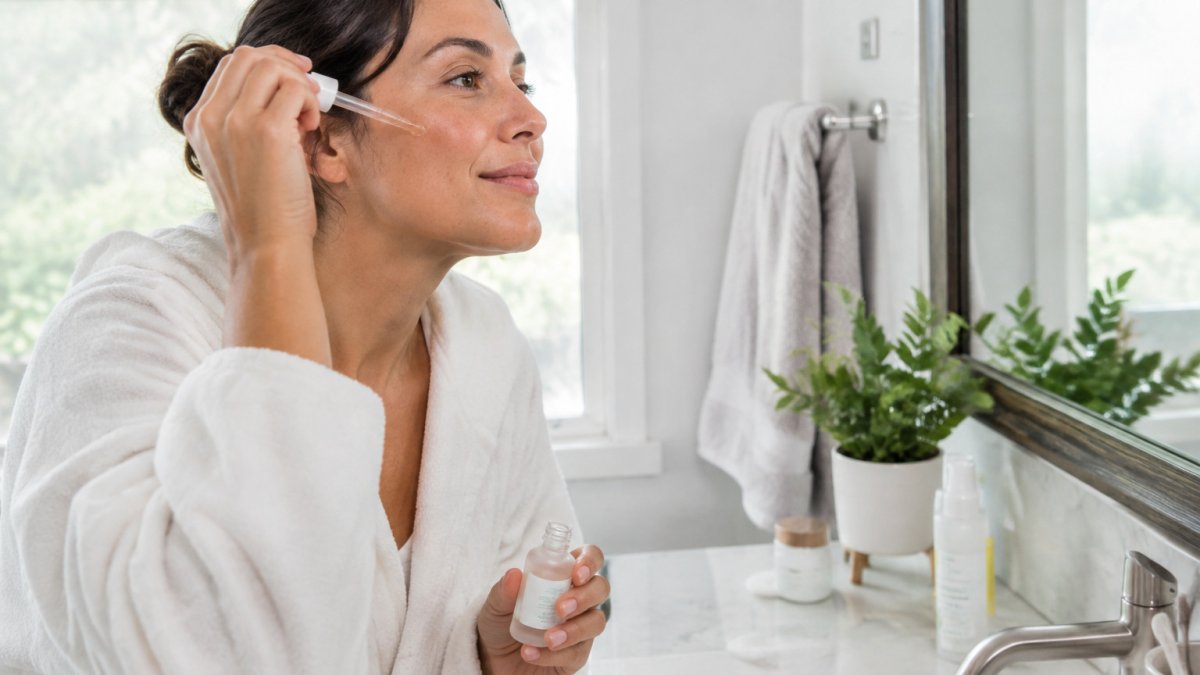
Best Exfoliant for Acne Dark Spots on Face: AHA vs. BHA for Dark Spots
Exfoliants are one of the most common tools for uneven tone, because they help remove the dull surface layer that makes marks look darker.
AHAs, such as glycolic and lactic acid, work on the skin's surface and are water-soluble. They are often the first pick for dry or sun-damaged skin with surface-level discoloration. Lactic acid is often considered gentler than glycolic.
BHAs, mainly salicylic acid, are oil-soluble, so they can move into pores. That makes them a common choice for congested, acne-prone skin, where they help clear buildup inside the pore. A low-strength BHA, often in the 0.5% to 2% range, is the typical entry point.
For acne dark spots on the face, many people do best starting with a gentle AHA or a low-strength BHA a few nights a week. Start slowly. Over-exfoliating can irritate the skin and make redness look worse.
How to layer exfoliants with acne treatments. This is where most routines go wrong. If you already use a benzoyl peroxide spot treatment, a retinoid, or an acne cleanser, add only one exfoliating step and keep it on separate nights from your strongest acne product.
How to introduce a new exfoliant gradually. Patch test on the jawline or inner arm for three to five days. Then use it once a week for two weeks, twice a week for two weeks, and only then consider a third night. If your skin stings, flakes, or looks shinier and tighter than usual, drop back to the previous frequency.
Ingredient compatibility. Brightening ingredients such as niacinamide and vitamin C generally pair well with AHAs and BHAs, but apply them at different times of day if your skin is reactive. Niacinamide in the morning and an exfoliant at night is a simple split that most people tolerate.
Texture and makeup compatibility. Water-based exfoliant serums and pads sit well under moisturizer and makeup. Thick creams with acids can pill under foundation, so give any exfoliant a few minutes to absorb before the next step.
Realistic timelines. Track progress with a photo in the same light every two weeks rather than judging by memory.
Here is how the two main exfoliant families compare for acne dark spots on the face.
| Type | Works on | Best for |
|---|---|---|
| AHA (glycolic, lactic) | Skin surface, water-soluble | Dry or sun-damaged skin with surface discoloration |
| BHA (salicylic acid) | Inside pores, oil-soluble | Congested, acne-prone skin |
| Low-strength BHA | Typically 0.5% to 2% | Typical entry point for acne-prone skin |
| Lactic acid (AHA) | Surface | Often considered gentler than glycolic |
Best Exfoliant for Acne Dark Spots at Home
You do not need a clinic to use an exfoliant at home, but you do need restraint. A practical approach is to use one exfoliating product, two to three nights per week, and to pause if your skin stings or feels tight.
How to judge an at-home exfoliant. Look for three things: a named acid with a strength you can read on the label, a formula that is water-based or gel-based rather than a heavy cream, and the absence of added fragrance if your skin is reactive. A product that lists its acid percentage is easier to introduce gradually than one that hides the strength behind a blend.
How to build the habit. Keep the exfoliant next to your evening cleanser so it is part of the same motion. Apply it to dry, clean skin, wait a minute, then follow with moisturizer. On the nights you skip it, use a calming moisturizer instead so your routine stays consistent.
Our recommendation for a gentle, at-home option is the Turmeric Kojic Acid Cleansing Pads, which are designed to help brighten skin, remove buildup, and support a smoother-looking complexion. They are priced at $34.99.
Pair any exfoliant with daily sunscreen. Sun exposure can keep dark marks looking darker for longer. A broad-spectrum sunscreen with an SPF of 30 or higher, reapplied every two hours outdoors, is the baseline.
Progress tracking. Take a photo in the same light every two weeks. Note how your skin feels the morning after each use, not just how it looks. If marks are not changing after six to eight weeks of consistent use, that is a signal to simplify rather than add more products.
When to pause and seek help. If you notice persistent redness, peeling, or spots that are raised, painful, or spreading, stop the exfoliant and consider talking with a dermatologist. If you are unsure about a mark, a dermatologist can take a closer look.
Realistic expectations matter here. Surface-level marks may begin to look lighter over several weeks of consistent use. For a fuller look at natural ways to fade dark spots and what realistic results look like, see our guide. Deeper marks take longer and may need more time than a single product can provide.
Best Exfoliator for Hyperpigmentation on Body and Gentle Cleansing Pads
Hyperpigmentation is not limited to the face. Dark marks on the body often respond to the same gentle exfoliation, though body skin is usually thicker and can tolerate slightly more, so it still should not be scrubbed hard.
Cleansing pads are a practical format because they combine a light cleanse with a gentle exfoliating step in one motion. You can shop the Turmeric Kojic Acid Cleansing Pads for this kind of gentle, everyday step. Use them on clean skin, avoid the eye area, and stop if you notice persistent redness.

Our Turmeric Kojic Acid Cleansing Pads are a quick, gentle option you can consider. As always, patch test on a small area first, such as the jawline or inner arm, and watch for three to five days before using it more widely.
Building a Simple Daily Routine for Dark Spots and Sensitive Skin
A simple routine is easier to stick with than a complicated one. A workable daily plan for breakout-prone or sensitive skin looks like this:
- Morning: Gentle cleanser, lightweight non-comedogenic moisturizer, and broad-spectrum sunscreen.
- Evening: Gentle cleanser, an exfoliant two to three nights a week, and a calming moisturizer on other nights.
- Every new product: Patch test first, and introduce only one new product at a time.
Fragrance-free products are a sensible choice for reactive skin, since fragrance is a common source of irritation. Read which fragrance-free skincare works for breakout-prone skin and how to patch test new products safely. Our humanroots recovery spray is formulated with no added fragrance.
Give any change at least four to six weeks before judging it. Track how your skin looks and feels in a simple notebook or phone note. If dark spots are not improving, or if you have persistent, painful, or spreading breakouts, consider talking with a dermatologist.
Ready to build your routine? Explore shop the humanroots collection and start with one gentle step at a time.
Frequently Asked Questions
Which exfoliant is best for dark spots?
For most people with acne-prone skin, a gentle chemical exfoliant is the easiest place to start. Salicylic acid (a BHA) works inside pores, which can help with congestion, while glycolic and lactic acids (AHAs) work on the surface and can help even the look of tone over time. Start with one product two or three times a week, watch how your skin responds, and increase only if it stays calm. Results usually take several weeks to become visible, so judge progress over a month rather than a few days.
Will exfoliating get rid of dark spots from acne?
Exfoliating is not a fast fix for dark spots. Dark spots that have been present for a long time may fade slowly, and some may not disappear completely. Pair exfoliation with daily sunscreen, since sun exposure can keep marks darker for longer. If you are concerned about a spot, a dermatologist can assess it.
How can I fade acne dark spots without clogging pores?
Look for products labeled non-comedogenic and fragrance-free, and avoid heavy oils or thick occlusive layers on marked areas. Introduce new actives one at a time so you can tell what your skin tolerates. Look for a lightweight sunscreen to protect marks you are working on. Keep your routine short so irritation is easier to spot.
