

Is Makeup Safe for a Damaged Skin Barrier?
Last Updated: November 17, 2026
Quick Summary
You can wear makeup with a damaged skin barrier if you choose fragrance-free, non-comedogenic formulas and apply them in light layers. Match the formula to your current skin state, prep gently, and remove it without scrubbing. Stop using exfoliating acids, retinoids, and waterproof makeup until your skin calms.
- Stinging after applying a product you have used for months is a common early sign of barrier damage.
- Set aside exfoliating acids, retinoids, harsh cleansers, fragranced products, and waterproof makeup while healing.
- Mineral powder suits oily or red skin, while liquid or cream formulas are better for flaking, dry skin.
- Patch test new products behind the ear or along the jaw and wait 24 hours before full use.
- Wash brushes weekly and replace beauty sponges every one to three months.
Table of Contents
- What a Damaged Skin Barrier Means for Your Makeup Routine
- Signs Your Barrier Is Compromised Before You Reach for Foundation
- What Not to Use When Skin Barrier Is Damaged
- What to Put on Face When Skin Barrier Is Damaged
- Choosing Makeup That's Safe for a Damaged Skin Barrier
- A Step-by-Step Makeup Routine for Compromised Skin
- How Long Does It Take to Repair Skin Barrier Damage?
- Building a Barrier-First Routine with Humanroots
- Frequently Asked Questions
What a Damaged Skin Barrier Means for Your Makeup Routine
A damaged skin barrier is the outermost layer of your skin gone thin and leaky, so moisture escapes and irritants get in. That changes how makeup behaves on your face. Foundation that looked smooth last month can now cling to dry patches, sting on contact, or trigger redness within minutes.
It usually isn't the makeup. It's the barrier underneath it.
The good news is that you can still wear makeup while your skin barrier recovers. You just may need to change what you reach for and how you apply it. Below, we'll show you exactly how to pick products, prep your skin, and build a routine that covers without aggravating.
If you want the full picture on what barrier damage is and how to fix it, our guide on what a skin barrier is walks through the warning signs and a simple repair routine.
Signs Your Barrier Is Compromised Before You Reach for Foundation
Your skin usually tells you before you notice it in the mirror. The most common early signal is stinging. A product you've used for months suddenly burns for a few seconds after application.
Other signs to watch for:
- Dryness and flaking, especially around the nose and cheeks
- Redness that lingers longer than usual
- Itchiness or a tight feeling after cleansing
- Rough patches that makeup settles into
- Breakouts that appear in new areas
One or two of these can also show up with other skin issues. The pattern matters more than any single symptom. If your skin reacts to several products at once, barrier damage is a reasonable first guess.
Here's what most guides miss: over-exfoliation is a leading cause, and it often starts with a product you were told was gentle. Daily acid toners, scrubs, and strong cleansers wear down the skin's lipids over time.
What Not to Use When Skin Barrier Is Damaged
The fastest way to slow healing is to keep using the things that caused the damage. Set these aside until your skin calms down:
- Exfoliating acids like glycolic, lactic, and salicylic acid
- Retinoids, including over-the-counter retinol
- Harsh cleansers with sulfates or high alcohol content
- Fragranced products, including naturally fragranced ones
- Physical scrubs and cleansing brushes
- Waterproof and long-wear makeup that needs heavy removal
That last one surprises people. Waterproof mascara and transfer-proof foundation can require stronger removers.
If you're avoiding a specific product line and want sensitive-skin alternatives, this breakdown of a La Roche Posay alternative for sensitive skin covers what to look for instead.
Watch out: cutting out every product at once makes it impossible to know what helped. Remove the harsh ones first, and change one thing at a time.
What to Put on Face When Skin Barrier Is Damaged
Less is the answer, and the order matters more than the number of steps. A simple, gentle routine gives your skin the conditions to repair itself.
Start with a gentle, non-foaming cleanser. Follow with a moisturizer that contains ceramides, which are lipids that help rebuild the barrier (pubmed.ncbi.nlm.nih.gov). At night, a thin layer of petroleum jelly over dry areas works as an occlusive, sealing moisture in while you sleep.
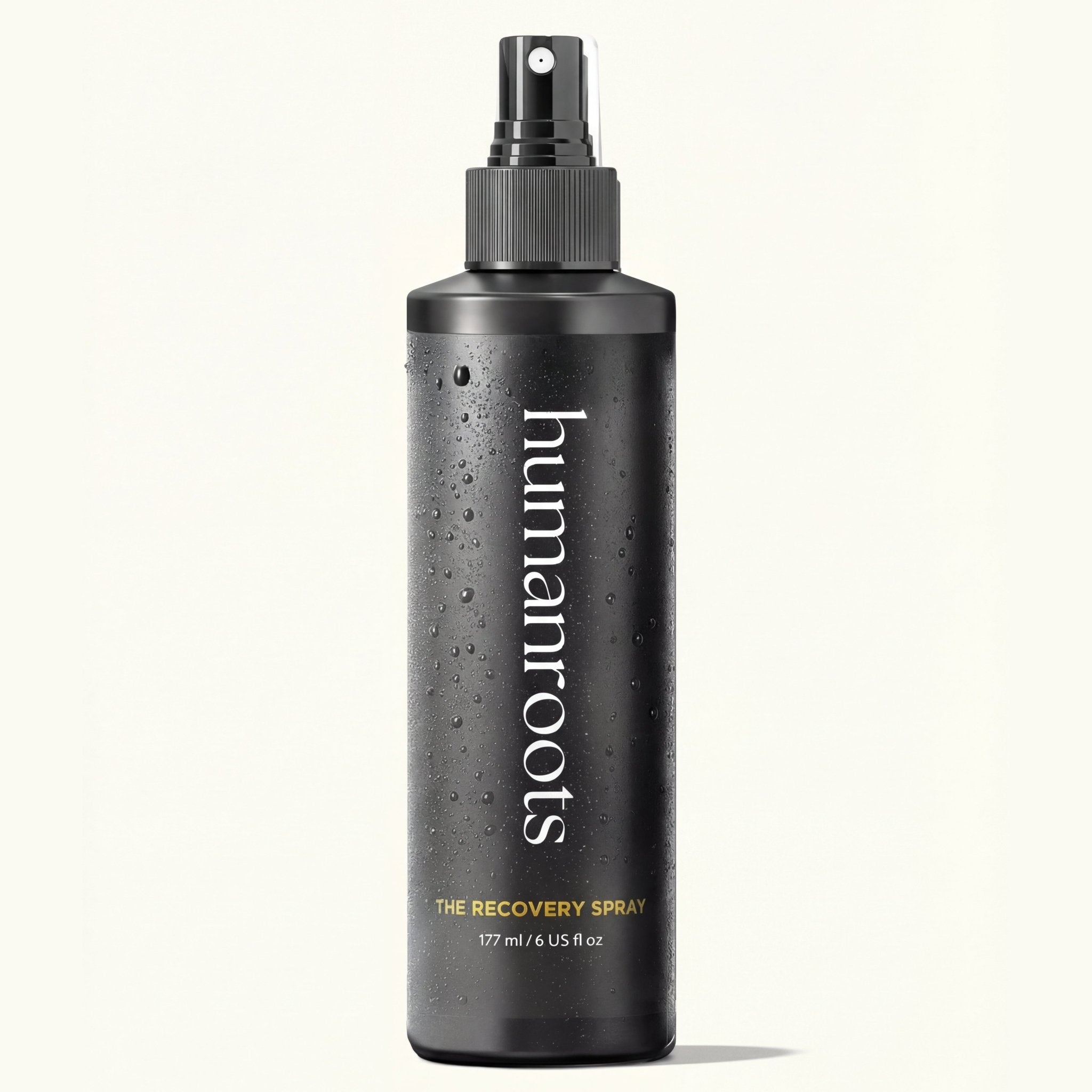
A soothing mist can help between steps. Our The Recovery Spray is a lightweight hypochlorous acid mist that's non-comedogenic with no added fragrance. It's designed to calm irritation and support the skin barrier.
Skip the toners, essences, and serums for now. Every extra layer is another chance for irritation, and your skin doesn't need them while it heals.
Choosing Makeup That's Safe for a Damaged Skin Barrier
Makeup safe for damaged skin barrier recovery comes down to three labels: fragrance-free, non-comedogenic, and simple. Everything else is preference. But the label alone won't tell you how a formula will behave on flaking, stinging skin, so it helps to know what each type does well and where it tends to go wrong.
Here's how the main formula types compare:
| Formula Type | Best For | Watch Out For |
|---|---|---|
| Mineral powder | Oily or combination skin, redness | Can look dry on flaking patches |
| Liquid foundation | Dry or mature skin | Check for fragrance and alcohol |
| Cream formulas | Very dry, tight skin | Heavier feel, needs gentle removal |
| BB cream | Light coverage days | Often fragranced, check the label |
| Powder blush | Quick touch-ups | Can emphasize texture |
Mineral makeup is a common choice for irritated skin. It often skips fragrance, and it sits on top of the skin rather than sinking in. The trade-off is finish: loose mineral powder can catch on dry patches and make flaking look worse, so it suits oily or combination skin better than very dry skin. If your skin is dry, a fragrance-free liquid or cream gives a dewier finish with less flaking, but those formulas often contain more ingredients, so read the label closely.
A quick way to choose: match the formula to your current skin state, not your old one. If you're flaking, go liquid or cream. If you're oily and red, mineral powder is easier to layer lightly. If you want minimal coverage while you heal, a tinted moisturizer or a sheer BB cream can work, provided it's fragrance-free.
Before you buy anything, run through this checklist:
- Fragrance-free, including "natural fragrance" and essential oils
- Non-comedogenic
- No alcohol denat near the top of the ingredient list
- No essential oils such as lavender, citrus, peppermint, or eucalyptus
- Fewer than 15 ingredients, ideally
- No acids or retinoids in the formula
Ingredient-level guidance matters more than broad labels. On a damaged barrier, the usual suspects are fragrance (including "parfum" and botanical fragrances), drying alcohols like alcohol denat, essential oils, and exfoliating acids. Preservatives are harder to avoid in liquid and cream formulas, but a short ingredient list limits your exposure.
Watch out: "fragrance-free" and "unscented" are not the same thing. Unscented products can still contain masking fragrance, so look for the words fragrance-free on the label and scan the ingredient list for parfum or aroma.
Our guide on what to check before buying a natural skin recovery spray covers the ingredient and fragrance questions in more detail.
A Step-by-Step Makeup Routine for Compromised Skin
Prep first, and keep your hands off your face. Clean tools and a light hand do more for irritated skin than any product swap. This is the part most guides skip: the order you apply things, the tools you use, and how you take it off all affect whether your skin calms down or flares.
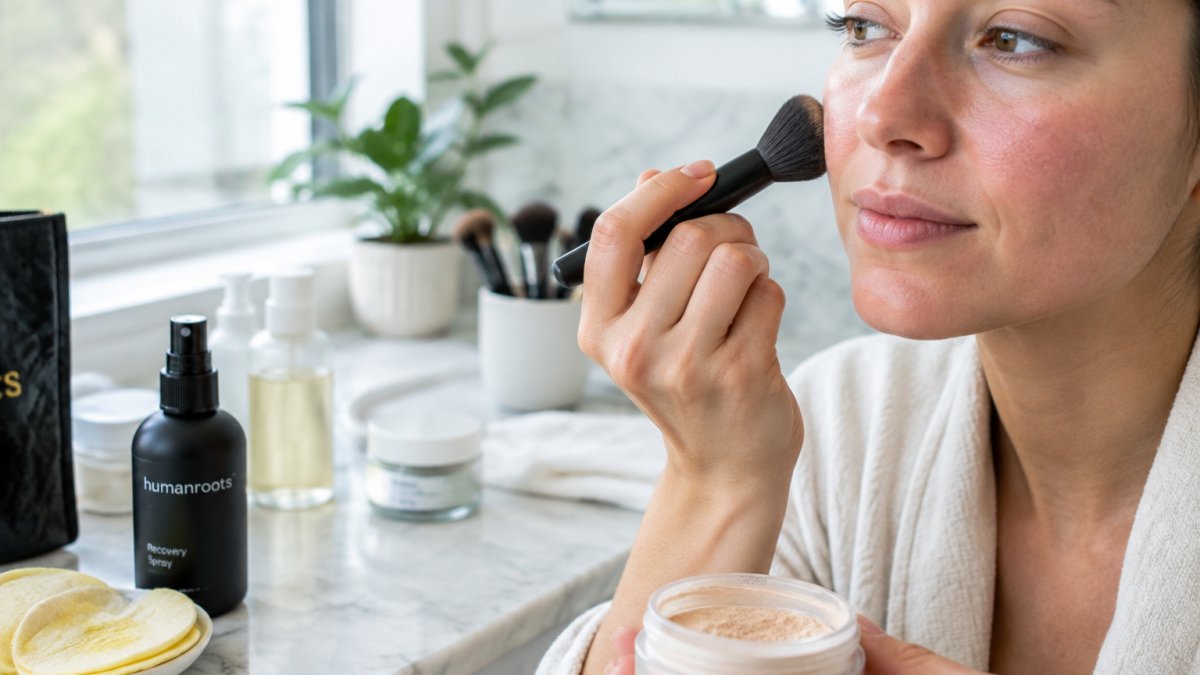
- Cleanse gently. Use lukewarm water and a soft, non-foaming cleanser. Pat dry with a clean towel, don't rub.
- Mist and moisturize. Spritz a soothing mist, then apply moisturizer while skin is still slightly damp so it seals in water.
- Wait two minutes. Let skincare absorb before makeup goes on. Applying foundation over slick moisturizer causes it to slide and pill, which leads to more touching and blending.
- Patch test new products first. Apply a small amount behind your ear or along your jaw and wait 24 hours. Introduce one new product at a time so you can tell what caused a reaction.
- Apply with a clean brush or damp sponge. Fingers work too, but wash them first. A damp sponge presses product in with less dragging than a dry brush.
- Use light layers. Thin coverage, built up slowly, irritates less than one heavy coat. Start in the center of your face and blend outward.
- Skip the setting powder on dry areas. Use it only where you get shine, and press it in rather than sweeping.
- Remove gently. Use a soft cleanser or micellar water, no scrubbing. For eye makeup, hold a soaked cotton pad against the lid for a few seconds before wiping down.
Tool hygiene is where a good routine quietly falls apart. Brushes and sponges collect oil, dead skin, and bacteria, and pressing that into compromised skin is a common cause of new breakouts. Wash brushes weekly with a gentle soap, replace beauty sponges every one to three months, and don't share tools. Retire any product that's past its expiration or has changed smell or texture.
Coverage is a trade-off while you heal. Sheer, buildable layers hide redness without the heavy removal that full-coverage, long-wear formulas demand. If you need more coverage for an event, spot-conceal rather than layering foundation all over, and plan for a gentler removal that night.
Watch out: if a product stings on application, don't push through it. Stinging is a signal, not a stage of adjustment, and continuing to apply it can set your recovery back.
How Long Does It Take to Repair Skin Barrier Damage?
Everyone's timeline is different. Full recovery often takes longer than a few weeks, especially if the damage built up over months.
The timeline depends on three things: how much you cut back, how consistent you are, and whether you keep testing new products. Every new product restarts the clock a little.
If you're wondering about realistic expectations for any skincare change, our guide on how long to see skincare results breaks down what's normal at each stage.
One customer, Sarah M., put it this way: "After a couple weeks, my skin looked less reactive, breakouts didn't flare the same, and everything just felt more calm and under control."
Stop and see a clinician if you notice swelling, spreading redness, warmth, oozing, or pain that gets worse. Those signs point to something that needs medical care, not a routine tweak.
Building a Barrier-First Routine with Humanroots
A barrier-first routine is simple by design: gentle cleanse, soothing mist, moisturizer, and light makeup when you need it. That's it until your skin settles.
Our Recovery Spray uses hypochlorous acid to help calm irritation and support the skin barrier, with no added fragrance and a non-comedogenic formula.
If you've been layering products hoping something sticks, try fewer. Your skin will tell you within a few weeks whether it's working.
Your skin is asking for less, not more. Start with a gentle cleanse, a soothing mist, and a moisturizer, then add makeup back slowly. Get started with humanroots and give your barrier the simple support it needs to calm down and rebuild.
Frequently Asked Questions
Can I put makeup on a damaged skin barrier?
You can, but keep it minimal and choose formulas carefully. A damaged skin barrier is more reactive, so heavy coverage, fragrance, and drying ingredients can add irritation on top of what's already happening. Stick to gentle, non-comedogenic, fragrance-free options, apply with clean tools, and remove everything at night with a soft cleanser. If your skin is stinging, cracked, or actively inflamed, give it a few days without makeup first.
What should I avoid using when my skin barrier is damaged?
Skip products with added fragrance, alcohol high on the ingredient list, physical scrubs, and strong exfoliating acids like glycolic or salicylic acid until your skin settles. Harsh cleansers that leave skin tight, waterproof or long-wear foundations that demand heavy removal, and anything that stings on contact are also worth setting aside. Simplify to a gentle cleanser, a moisturizer, and a barrier-supporting mist while you recover.
How long does it take to repair a skin barrier?
Recovery time varies. Many people find their skin calms over several weeks of simplifying their routine and avoiding irritating products, and full recovery depends on how damaged the barrier was and how consistently you avoid triggers. If redness, stinging, or flaking hasn't improved after a month, or if you see signs of infection, it's worth checking in with a clinician.
How can I apply makeup without irritating sensitive skin?
Prep with a moisturizer and let it absorb for a few minutes, then apply a thin layer of mineral or cream foundation with a clean brush or damp sponge using light tapping motions instead of rubbing. Avoid layering too many products, skip setting powders that can cling to flakes, and remove makeup gently at night with a soft cleanser. Wash your brushes weekly and replace sponges often to keep bacteria out of the equation.
