

7 Things to Check Before You Buy a Natural Skin Recovery Spray
Quick Summary
A natural skin recovery spray is a fine-mist product meant to help refresh skin between cleansing and moisturizing. It is a gentle comfort step, not a treatment for a medical condition. Choose one by matching the spray to your skin's main concern and checking for fragrance-free, non-comedogenic labels.
- Match the formula to your main concern, such as dry, irritated, reactive, or breakout-prone skin.
- Patch test a small area of your jawline or inner arm and wait a day before full use.
- Be wary of treatment words like heals, treats, or cures, since they go beyond a cosmetic mist.
- A spray supports your routine but does not replace cleansing or daily sunscreen.
- Use one spray daily for two to three weeks and track how your skin responds.
Table of Contents
- What a Natural Skin Recovery Spray Is Used For
- How Hypochlorous Acid Spray for Skin Fits Into a Routine
- Choosing a Skin Soothing Spray for Sensitive Skin
- Reading Natural Skin Recovery Spray Reviews and Claims
- Checking for Non-Comedogenic Facial Mist Labels and Your Next Step
- Frequently Asked Questions
What a Natural Skin Recovery Spray Is Used For
A natural skin recovery spray is a fine-mist product meant to help refresh skin between cleansing and moisturizing. Think of it as a quick, gentle reset for the face, not a treatment for a medical condition.
Market research points to strong interest in this category. A U.S. survey reported that 59% of respondents preferred skincare made with natural or organic ingredients (Market.us skincare statistics report). That preference explains why so many brands now sell spray formats built around botanical or water-based ingredients.
The research on sprays is encouraging but still limited. A review of spray products describes them as a promising technique for skin applications and notes that clinical trials have studied spray products for skin diseases (review of spray products for skin regeneration). Notice the word "promising." It is not the same as proof that every spray works for everyone.
How Hypochlorous Acid Spray for Skin Fits Into a Routine
Hypochlorous acid is one of the ingredients drawing the most attention in this category. NBC Select describes spraying hypochlorous acid on the face as a current skincare trend, though the trend coverage does not include sales figures (NBC Select skincare trend coverage).
In practice, a hypochlorous acid mist can be used as a step after cleansing, before moisturizer. Mist your face, let it air-dry for a few seconds, and then apply your usual moisturizer.
If you want a concrete example, The Recovery Spray from humanroots is a hypochlorous acid mist designed for daily use. Our guide on how to use hypochlorous acid mist after workouts walks through exactly when and how to apply it in your routine. It is described as a lightweight, fast-absorbing mist designed to leave no residue. You can see how The Recovery Spray fits a daily routine before you decide.

Watch out: a spray is a supporting step, not a replacement for sunscreen or a proper cleanser. Skipping those basics because you added a mist is the most common routine mistake.
Choosing a Skin Soothing Spray for Sensitive Skin
Sensitive skin needs a shorter ingredient list and fewer surprises, but "gentle" on a label does not tell you whether a spray matches your specific concern. A more useful approach is to match the concern to the formula type before you compare brands.
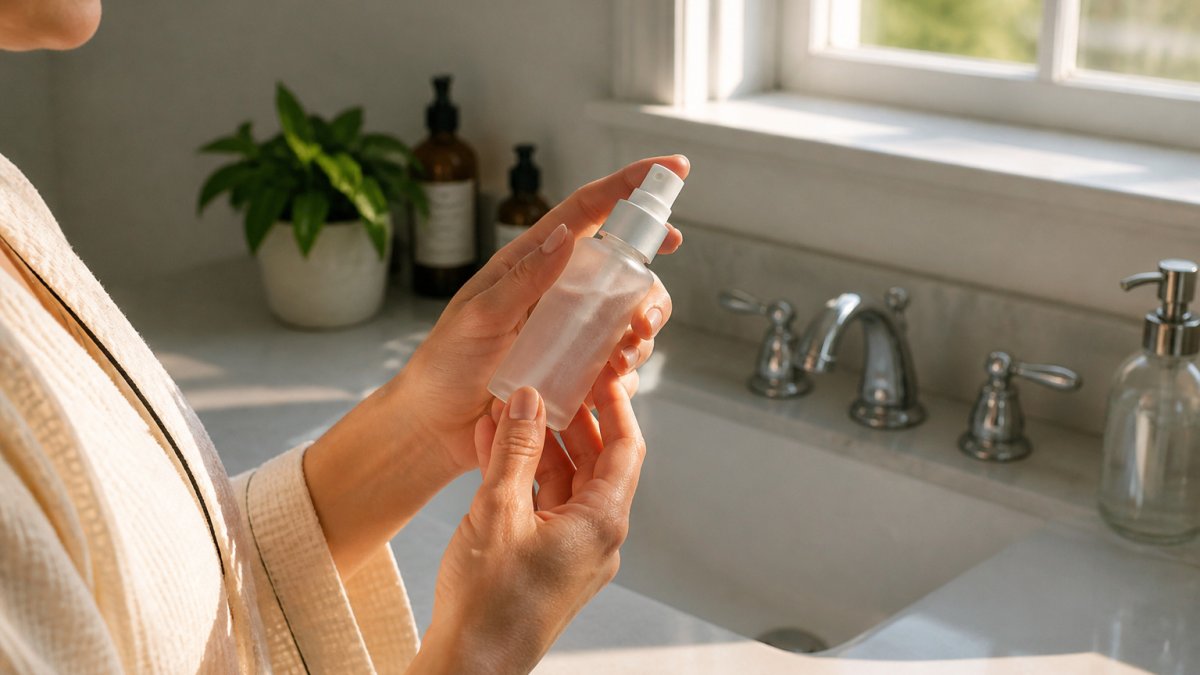
Start with what your skin is actually doing. Dry, tight skin often pairs well with mists containing humectants (glycerin, hyaluronic acid, aloe) that help draw in water. Irritated or flushed skin is often paired with short, water-based formulas built around soothing ingredients like colloidal oatmeal, chamomile, or allantoin. Allergy-prone or reactive skin often does best with fragrance-free, alcohol-free formulas with fewer ingredients. Breakout-prone skin should look for a non-comedogenic label and avoid heavy oils in a mist.
A simple matching guide:
- Dry or tight skin: humectants (glycerin, hyaluronic acid) and aloe
- Irritated or flushed skin: colloidal oatmeal, chamomile, allantoin
- Reactive or allergy-prone skin: fragrance-free, alcohol-free, short ingredient list
- Breakout-prone skin: non-comedogenic label, light water-based formula
- Post-workout or post-outdoors: hypochlorous acid or simple water-based mists for a quick refresh
Patch test before committing. Spray a small area of your jawline or inner arm, wait a day, and watch for redness or stinging. If you have a skin condition or a reaction that does not settle, talk to a dermatologist.
For readers who want a gentler way to think about redness, our guide on natural ways to calm facial redness walks through what to look for and what to avoid.
Matching the spray to your skin's main concern is easier when you compare the formula types side by side.
| Skin concern | Look for | Avoid or note |
|---|---|---|
| Dry or tight skin | Glycerin, hyaluronic acid, aloe | Heavy oils in a mist |
| Irritated or flushed skin | Colloidal oatmeal, chamomile, allantoin | Strong fragrance |
| Reactive or allergy-prone skin | Fragrance-free, alcohol-free, short ingredient list | Long ingredient lists |
| Breakout-prone skin | Non-comedogenic label, light water-based formula | Heavy oils |
| Post-workout or post-outdoors | Hypochlorous acid or simple water-based mist | Skipping cleanser or sunscreen |
Reading Natural Skin Recovery Spray Reviews and Claims
Reviews can be helpful, but they vary widely, and the claims on a product page deserve the same scrutiny. A useful way to read both is to separate what a spray is supported to do from what it is only marketed to do.
Start with the claims themselves. Soothing, refreshing, and calming are comfort claims that fit a cosmetic spray. Words like "heals," "treats," "cures," or "repairs damaged skin" move into treatment territory, and a product making those claims is being positioned differently from a simple cosmetic mist. The FDA explains that classification depends on intended use, not just on whether something is labeled natural (FDA guidance on cosmetics versus drugs). When a listing leans on treatment language, treat the claim as unproven until you see the evidence behind it.
Then look at the reviews. A review from someone who used the product daily for several weeks and names their skin type tells you more than a generic five-star rating. Look for patterns: do multiple reviewers describe the same effect, or the same problem? A cluster of reviews mentioning stinging, breakouts, or residue is more informative than a single glowing one.
A spray is a comfort step, not a substitute for care. Watch out: stop using a spray and seek professional advice if you see spreading redness, swelling, warmth, oozing, crusting, or a sore that is not healing, or if itching keeps getting worse despite consistent use.
If you are comparing sprays, our hypochlorous acid spray for redness guide explains which claims to take seriously and which to question.
Checking for Non-Comedogenic Facial Mist Labels and Your Next Step
Before you buy, check the label for three things: non-comedogenic (designed not to clog pores), fragrance-free, and a clear ingredient list. Non-comedogenic is a helpful signal for breakout-prone skin, but it is a label, not a guarantee.
Here is a simple checklist before you buy:
- Fragrance-free or clearly labeled as such
- Ingredient list you can read and understand
- Non-comedogenic label, if you are breakout-prone
- Clear size and price, so you can compare value per use
- Simple instructions for daily use
- A patch test plan for sensitive skin
If you want to try a spray that checks several of these boxes, The Recovery Spray is a good option to start with. It lets you test how your skin responds before you commit to a longer routine.
For most people, the best next step is to pick one spray, use it daily for two to three weeks, and track how your skin feels. That gives you a fair test without guessing.
Frequently Asked Questions
What is a natural skin recovery spray used for?
A natural skin recovery spray is typically used to refresh and soothe skin after cleansing or throughout the day. Many people use them to refresh and soothe skin. Because claims vary by product, read the label and product description to see which uses are listed. A spray is a supportive step in a routine, not a treatment for medical skin conditions, so see a dermatologist for persistent or severe symptoms.
Is hypochlorous acid spray considered natural?
Hypochlorous acid is a naturally occurring molecule that your body's immune cells also produce, which is why it is often described as a gentle, natural option. Sprays that use it are usually formulated with water and a small amount of the compound. Check the ingredient list to confirm what else is included, since other formulas in the same category may add botanicals, alcohol, or fragrance. Product formulations differ, so compare labels rather than assuming all such sprays are alike.
How do I choose a skin spray for sensitive skin?
Start by looking for a short ingredient list and a fragrance-free label, since added fragrance is a common trigger for reactive skin. Check whether the spray is alcohol-free and whether the brand describes it as suitable for sensitive skin. Patch test a small area on your inner arm or jawline for a few days before using it on your face. If redness, stinging, or itching continues or worsens, stop using the product and consult a dermatologist.
How often should you use a skin recovery spray?
Many spray products are designed for daily use, often in the morning after cleansing or in the afternoon when skin feels dry or warm. Follow the directions on the specific product you buy, since frequency can differ. Spray from a comfortable distance, close your eyes, and let the mist settle before applying moisturizer or sunscreen. If you notice any new irritation, reduce how often you use it and check with a healthcare professional.
Note: Product details reflect the listing. Individual results will vary, and this article is not medical advice.
