

Exfoliating Pads or Liquid Exfoliant: Which Suits Beginners?
Last Updated: November 8, 2026
Quick Summary
For beginners, exfoliating pads are usually the easiest choice because each one is pre-dosed, so there is no guessing how much to apply. Liquid exfoliants give more control over where and how much you use, but they take a little practice. Patch test either one on your jawline first.
- Pads are pre-dosed, making them the simplest format for a quick routine.
- Wiping with pads adds friction, so switch to a softer option if stinging appears.
- Liquids let you apply a thinner layer and adjust amounts around sensitive areas.
- Exfoliate no more than two or three times a week when you are starting out.
- Patch test on your jawline for a few days before using any exfoliant on your whole face.
Table of Contents
- What Exfoliating Pads and Liquid Exfoliants Actually Are
- Pads Versus Liquids: The Differences That Matter for Beginners
- How to Exfoliate Your Face at Home Without Overdoing It
- Choosing a Format for Dry and Sensitive Skin
- Starting Your First Month: Choose Your Format and Build Your Routine
- Frequently Asked Questions
What Exfoliating Pads and Liquid Exfoliants Actually Are
If you are new to exfoliation, you have probably seen two options everywhere: exfoliating pads and liquid exfoliants. Both remove dead skin cells from the surface of your face. They just do it in different ways, and that difference matters when you are starting out.
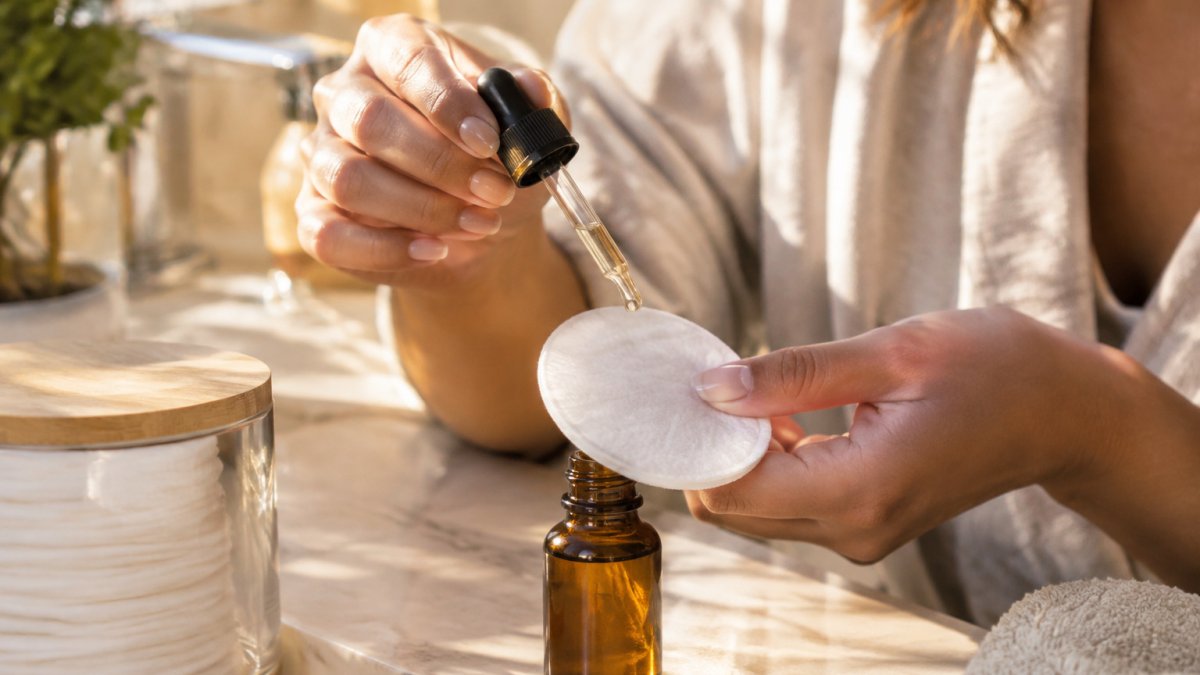
Exfoliating pads are pre-soaked cloths or textured discs. You wipe them over clean skin, and the solution on the pad does the work. Liquid exfoliants come in a bottle or dropper. You pour or dab a small amount onto your skin or a cotton pad, then spread it evenly.
Both formats usually contain chemical exfoliants such as alpha hydroxy acids (AHAs), beta hydroxy acids (BHAs), or polyhydroxy acids (PHAs). Some products also use gentle physical texture. Turmeric Kojic Acid Cleansing Pads from humanroots are one example of a pad designed to help brighten skin and remove buildup.
Quick definition: Chemical exfoliation uses acids to loosen the bonds between dead skin cells. Physical exfoliation uses scrubbing or texture to lift them away.
Pads Versus Liquids: The Differences That Matter for Beginners
Format changes how you apply the product, how much you use, and how easily you can control strength. For a beginner, those three things matter more than marketing claims. But format alone does not determine gentleness, acid type, concentration, pH, and the overall formula matter just as much. A well-buffered pad can be gentler than a strong liquid, and a mild liquid can be harsher than a pre-soaked pad. Compare products by reading the ingredient list and directions, not by assuming one format is safer.
Application, control, and friction
Pads are often the easiest format to use. For a ready-made pairing of cleansing pads with a daily essential, see The Clear Skin Duo. Each one is pre-dosed, so you do not have to guess how much solution to apply.

But wiping adds friction. Every swipe drags a textured or wet surface across your skin. For many people that is fine. For sensitive or reactive skin, it can feel like too much. If you notice redness or stinging right after wiping, switch to a softer pad or a liquid.
Liquid exfoliants give you more control. You decide how much to use and where. You can apply a thin layer around the nose and a lighter layer on the cheeks. Many people find liquids gentler because they can be applied with less rubbing. The tradeoff is that you have to measure and spread the product yourself, which takes a little practice. That extra control makes it easier to adjust the strength and type of exfoliant to your skin’s needs, a choice also reflected in Ideal Weight Loss & Cosmetic Center.
Active strength and cost per use
Strength is harder to compare than it looks. A pad and a liquid can list the same acid, but the final concentration and pH can differ. Check the ingredient list and the directions rather than assuming one format is stronger. A common pattern is that pads are pre-soaked at a fixed concentration, while liquids let you adjust the amount, but neither guarantees a gentler experience.
Cost per use also varies. Compare the price of the full package against how many uses you expect to get from it. Our Turmeric Kojic Acid Cleansing Pads are listed at $34.99 at shophumanroots.com. Check the number of pads per package to work out your own cost per use.

Patch testing and routine compatibility
Before using any exfoliant all over your face, patch test on your jawline for a few days. Apply a small amount, wait 24 hours, and check for redness, stinging, or bumps. If your skin stays calm, you can try a larger area.
Watch out: Layering several strong acids in one routine raises the chance of irritation. If you already use a retinoid, benzoyl peroxide, or vitamin C, introduce your exfoliant on separate days or at a different time of day until you know how your skin responds.
How to Exfoliate Your Face at Home Without Overdoing It
Over-exfoliation is the most common beginner mistake. It can leave skin red, stinging, and more reactive than before. Your skin barrier, the outer layer that holds in moisture and keeps irritants out, can get damaged if you push too hard.
Use this simple routine to start:
- Exfoliate no more than two or three times a week at first.
- Use clean, dry hands and a clean pad or applicator.
- Wipe gently. Never scrub.
- Skip the area around the eyes.
- Apply moisturizer after the exfoliant has dried or settled.
- Stop if your skin stings, burns, or turns red.
If you want to understand how to protect your barrier while you exfoliate, our guide on What Is a Skin Barrier: The Complete Guide to Repair and Care explains the basics.
Watch out: Layering several strong acids in one routine raises the chance of irritation. Use one exfoliant at a time while you learn how your skin reacts.
Choosing a Format for Dry and Sensitive Skin
If your skin is dry or sensitive, the format you pick can make a real difference in comfort.
| Format | Best for | Watch for |
|---|---|---|
| Exfoliating pads | Quick routines, travel, consistent dosing | Friction from wiping |
| Liquid exfoliant | Precise application, lighter touch | Measuring and spreading takes practice |
Pads may suit you if you want a fast step and do not mind a little wiping. Liquids may suit you if your skin reacts to friction and you want to apply a thin layer yourself. Either way, patch test on your jawline for a few days before using it all over your face.
If redness shows up after exfoliating, a gentle routine may be worth exploring. Our guide on How to Soothe Facial Redness Naturally covers the topic.
If you prefer a ready-to-use pad, the Turmeric Kojic Acid Cleansing Pads are a option to look at, and patch testing first is still wise for dry or reactive skin.
Starting Your First Month: Choose Your Format and Build Your Routine
Start slowly. A realistic first month might look like this:
- Week 1: Exfoliate twice, on non-consecutive days. Watch how your skin feels the next morning. If you notice redness or stinging, skip the next session and apply a gentle moisturizer.
- Week 2: If skin feels calm, keep two sessions per week. Add moisturizer if you have not already. Do not add other strong actives yet.
- Week 3: Stay at two sessions. If your skin is comfortable, you may add a third session, but keep them on non-consecutive days.
- Week 4: If your skin is comfortable at three sessions per week, you can maintain that pace. If you see flaking, tightness, or stinging, drop back to two sessions and focus on moisturizer and sunscreen.
Pair your exfoliant with a simple daily routine. Cleanse, apply a gentle moisturizer, and use sunscreen in the morning. Skin tends to be more sensitive to sun after exfoliating.
Watch out: If your skin stings, burns, or turns red after exfoliating, stop using the product for a few days and let your skin settle.
Ready to begin? Compare the format that fits your skin, start with two uses a week, and give your skin time to adjust. You can view the Turmeric Kojic Acid Cleansing Pads at humanroots.
Frequently Asked Questions
Are exfoliating pads worth it?
Exfoliating pads can be worth it for beginners who want a quick, measured way to exfoliate without measuring drops. Each pad is pre-dosed, so there is less guesswork about how much product to use. The trade-off is that you cannot adjust the amount once you start wiping. Start with a few uses a week and watch how your skin responds before deciding whether the convenience is worth the price to you.
Are liquid exfoliants better for beginners?
Liquid exfoliants are not automatically better, but they give you more control over how much product you apply and where. Because you can apply a small amount to specific areas, many beginners find them easier to dial in slowly. They can also be used with a reusable pad or cotton round to reduce waste. The right choice depends on your skin and how carefully you want to manage your routine, so a patch test on a small area is a sensible first step.
How often should a beginner use a chemical exfoliant?
A common approach is to begin with one or two uses per week and increase only if your skin stays calm. Avoid using an exfoliant every day in the first month, and skip nights when your skin feels stinging, tight, or raw. Watch for redness, flaking, or breakouts that persist beyond a day or two. If irritation continues, stop using the product and consider speaking with a dermatologist about your options.
Should you use an exfoliant before or after moisturizer?
Most people apply an exfoliant to clean, dry skin before moisturizer, so the moisturizer can help soothe and support the skin barrier afterward. Let the exfoliant absorb or dry for the time listed on the product before layering on other products. Avoid combining exfoliation with other strong actives in the same session, as this can increase the chance of irritation. Keep the routine simple while you are learning how your skin reacts.
