

Simple Skincare Routine for Busy Professionals
Quick Summary
A simple skincare routine for busy professionals is a short set of steps you can keep up daily: cleanse, treat, and moisturize, with sunscreen as the final morning step. Its strength is consistency, since a few minutes of steady care beats an elaborate routine you abandon after a few weeks.
- Build the routine around three jobs: cleanse, treat, and protect or moisturize.
- Keep the morning sequence under five minutes: cleanse, spritz a calming mist, then moisturize and apply sunscreen.
- Use exfoliating pads two or three nights a week rather than every night.
- Apply products from thinnest to thickest texture, with sunscreen last in the morning.
- Change one product at a time and give each change several weeks before judging results.
Table of Contents
- Why a Simple Skincare Routine Works Better for Busy Professionals
- The Three-Step Foundation Every Routine Needs
- Simple Morning Skincare Routine for a Fast Start
- Simple Nighttime Skincare Routine for Overnight Recovery
- Skincare Routine Order: What Goes On First
- Sun Protection, Hydration and Screen Fatigue in a Busy Day
- Travel Skincare Routine for Business Trips
- Keeping a Budget-Friendly Routine Consistent
- Choosing Your Starter Set and Building a Routine That Sticks
- Frequently Asked Questions
Stop by the pharmacy aisle on your way home and you'll see a wall of bottles promising clear, calm, glowing skin. The trouble for a busy professional is that most of those routines assume you have an hour and a shelf full of products to spare. This guide is written for the opposite situation: a few minutes in the morning, a few at night, and a routine you will actually keep up with. The simple skincare routine for busy professionals is built on a short list of steps that do the most work.
A simple routine works better for people with full calendars for three reasons. It is easier to stick with, so you get months of consistent use instead of weeks of enthusiasm. It can also be more economical, since you buy fewer products. And it is easier to troubleshoot, because when something irritates your skin you only have a few variables to check. Consistency tends to matter more than complexity for most people, and a routine that fits between meetings is one you will repeat.
Why a Simple Skincare Routine Works Better for Busy Professionals
The core idea is that a short routine done every day beats an elaborate one done when you have time. A skin barrier, the outer layer that holds moisture in and keeps irritants out, responds best to steady care. Frequent swapping of products can leave skin reactive, which is why many people with sensitive skin do better with fewer, gentler steps.
A common mistake is adding a new product every time a concern appears. Redness on Monday, a breakout on Wednesday, and by Friday there are seven products competing on your face. Start with a small set, give it several weeks, and change only one thing at a time. That approach makes it obvious what is helping and what is not.
The Three-Step Foundation Every Routine Needs
Most simple routines reduce to three jobs: cleanse, treat, and protect or moisturize. Cleansing removes the day's buildup, treatment addresses a specific goal such as clearing congestion or softening the look of dark spots, and the final step keeps moisture in and, during the day, shields skin from sun exposure.
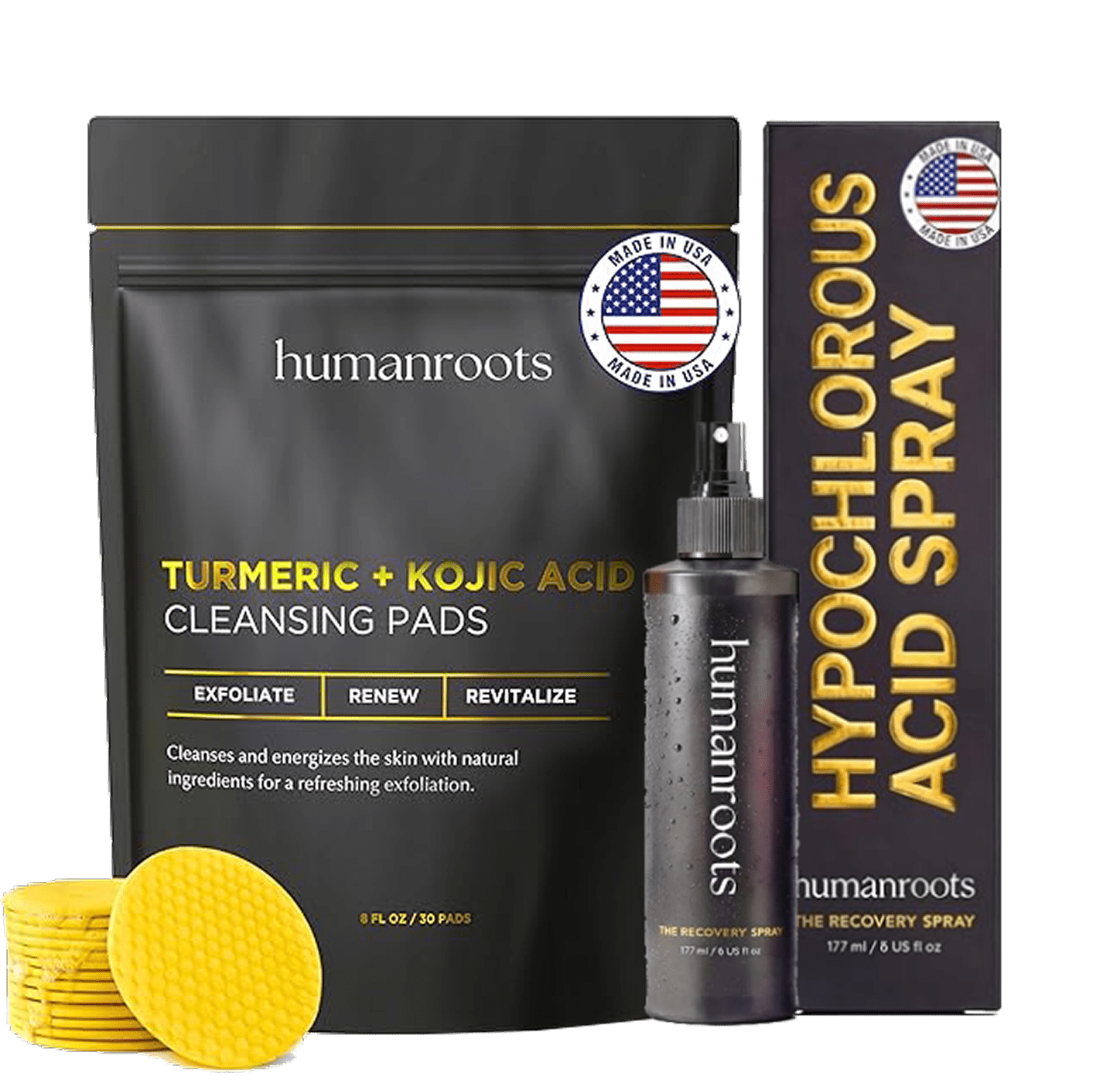
You do not need a separate product for every job. Multi-tasking products that cleanse and gently exfoliate, or a mist that calms and refreshes, can cover more than one step. Our Turmeric + Kojic Acid Cleansing Pads, priced at $34.99, are used to sweep away dull skin and pore-clogging buildup, while The Recovery Spray, at $19.99, is powered by hypochlorous acid and is designed for daily use with no added fragrance. If you want the two working together, The Clear Skin Duo bundles both steps into one set for $49.48.
For a deeper look at the barrier itself, read What Is a Skin Barrier: The Complete Guide to Repair and Care. Understanding it makes the reason for the foundation steps much clearer.
Simple Morning Skincare Routine for a Fast Start
Mornings are about getting out the door with skin that feels fresh and protected. A simple morning sequence might look like this:
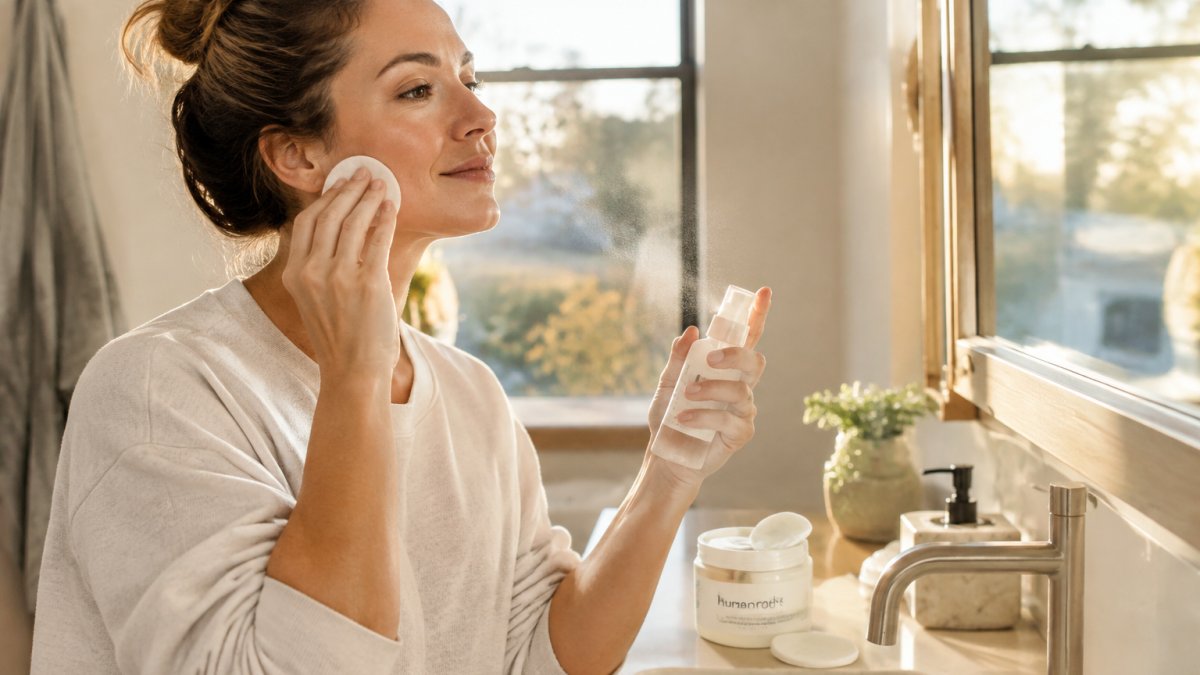
- Cleanse lightly with a gentle pad or rinse to clear overnight oil.
- Spritz a calming mist and let it dry for a few seconds.
- Apply a moisturizer, then sunscreen as the final layer.
Keep the whole process under five minutes. The mist is useful on busy mornings because it refreshes skin without needing to wait for a serum to absorb. Pair it with a broad-spectrum SPF, since sun protection is the step most people skip and the one that does the most long-term work. For a related morning-specific guide, see How to Use Hypochlorous Acid Mist After Workouts if you exercise before work.
Simple Nighttime Skincare Routine for Overnight Recovery
Evenings are when your skin does its repair work, so the nighttime routine focuses on removing the day's sunscreen, dirt, and makeup thoroughly, then supporting recovery. A straightforward sequence:
- Double-cleanse if you wore makeup or sunscreen, starting with a gentle first pass.
- Use an exfoliating pad two or three nights a week rather than every night.
- Finish with a moisturizer that suits your skin type.
Over-exfoliating is a frequent pitfall. If your skin feels tight, stings, or looks shiny but raw, scale back to fewer nights. Treat a rough evening as information, not a failure.
Skincare Routine Order: What Goes On First
Order matters because thicker products can block thinner ones from reaching skin. A general rule is to move from the thinnest texture to the thickest: cleanser, then mists and watery products, then lightweight treatments, then creams and oils, with sunscreen last in the morning. Apply each layer to slightly damp skin where the product calls for it, and give each one a moment to settle before the next.
If you are unsure, follow the packaging directions. Those instructions are written for that specific formula, so they are usually a safer guide than a general rule.
Sun Protection, Hydration and Screen Fatigue in a Busy Day
A full day at a desk under bright monitors, followed by a commute that moves between indoor air and direct sun, asks a lot of your skin. The three issues that show up most often are UV exposure, moisture loss, and the dull, tired look that comes from long screen hours. Each has a simple, low-effort fix that fits into the routine you already have.
Sun protection is the highest-value step in any daily routine. Broad-spectrum sunscreen is widely recommended as a daily habit for protecting skin from sun exposure (the CDC). For daily wear, look for a broad-spectrum formula with an SPF of 30 or higher, and apply it as the last step in your morning routine, about a nickel-sized amount for the face and neck. If you are in a rush, a moisturizer with built-in SPF can cover two steps at once, though most people find they need a dedicated sunscreen on top for full coverage. Reapply every two hours if you are outside for extended periods, and keep a stick or compact formula in your bag for quick touch-ups before an evening event.
Hydration is the second lever. Indoor heating and air conditioning pull moisture from the air, and skin loses water through the day as a result. A light moisturizer applied to slightly damp skin in the morning helps lock in water, and a hydrating mist at your desk can refresh without disturbing makeup or sunscreen. The key is to mist and then gently press the product in rather than letting it evaporate fully, which can leave skin feeling tighter. If your office is very dry, a small desktop humidifier is a low-cost way to keep ambient moisture up.
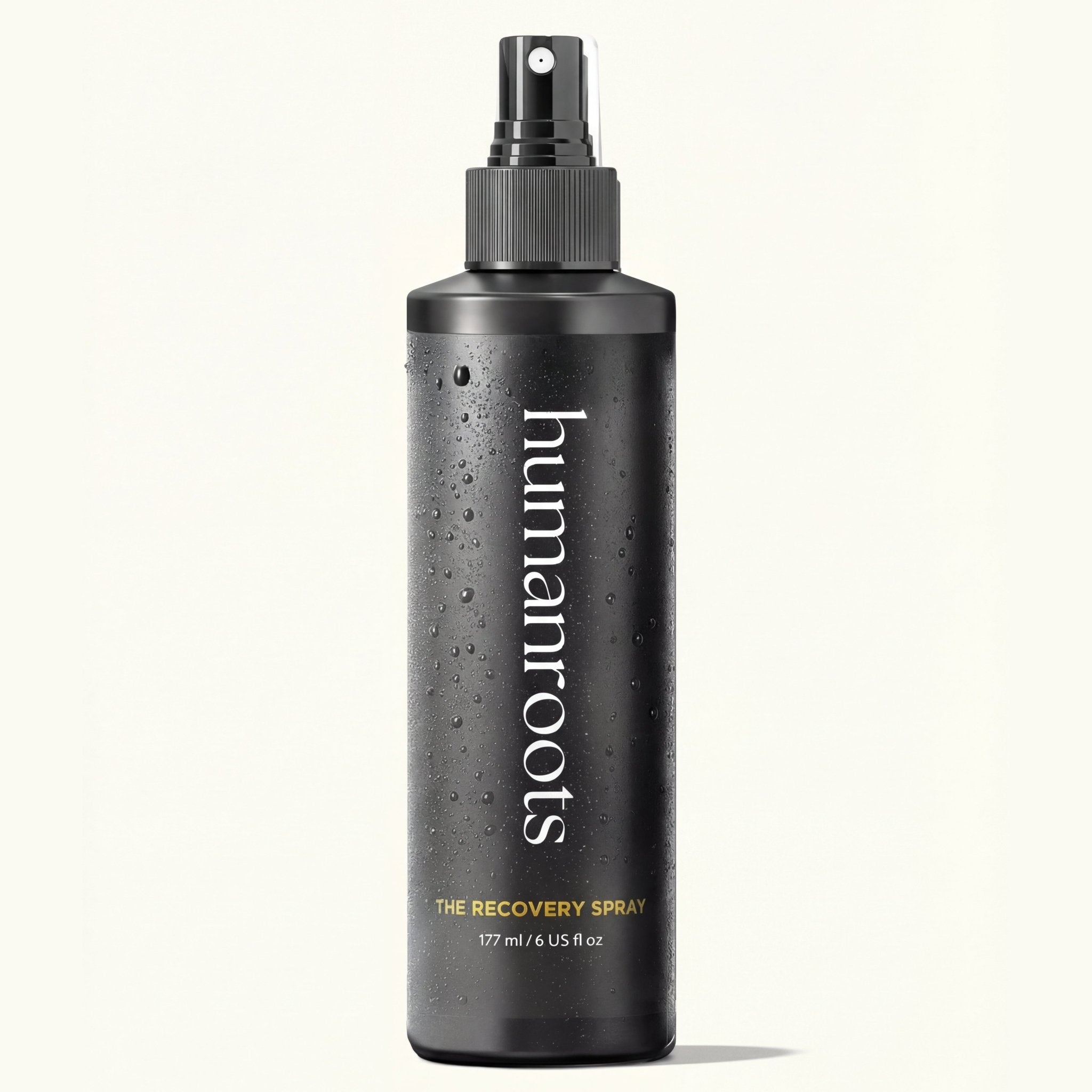
Screen fatigue is less about the screen itself and more about the habits around it. Long stretches of focus mean you blink less, and the skin around the eyes can look tired and puffy by mid-afternoon. A quick reset helps: step away from the monitor for a minute, do a few slow blinks, and if you keep a calming mist at your desk, a light spritz can refresh the face without adding fragrance or heaviness. The Recovery Spray contains no added fragrance and is non-comedogenic, which makes it a practical desk-side option for a midday refresh. Watch out: if you wear makeup, mist before you powder, not after, or you may get a patchy finish.
Stress is the wildcard. A demanding week can show up as redness or reactivity, and the simplest response is to scale back to fewer active products until things settle. A short, gentle routine during high-pressure periods is easier to keep up with and less likely to aggravate skin that is already reactive.
Travel Skincare Routine for Business Trips
Business travel compresses your routine into a carry-on and throws your skin into recycled cabin air, hotel bathrooms with unfamiliar water, and early starts. The goal is not to replicate your full home routine on the road, it is to keep the same few steps so your skin does not have to adjust to a completely new set of products mid-trip.
Start with the TSA rules, because they shape what you can pack. Check current airline and TSA carry-on liquid rules before you fly, as container size limits apply to liquids, gels, and creams. That means travel sizes or solid formats are your friends. A gentle cleansing pad, a small mist, a travel-size moisturizer, and a sunscreen stick or small SPF bottle cover the basics without crowding your bag. If you check a bag, you can bring full sizes, but most frequent travelers find the carry-on kit easier to keep packed and ready.
For the flight itself, cabin air is notoriously dry, and skin can feel tight by the time you land. A light layer of moisturizer before boarding helps, and a hydrating mist mid-flight can refresh without needing a sink. If you wear makeup, a cleansing pad is a quick way to reset before landing so you arrive with fresh skin rather than a full day of travel on your face. Watch out: do not apply a heavy cream right before landing if you have a meeting, give it time to absorb, or stick to a lighter lotion.
At the hotel, keep the sequence identical to home: cleanse, treat if you use a treatment, moisturize, and sunscreen in the morning. Hotel water can be harder or softer than what you are used to, and a gentle cleanser is less likely to strip skin when the water is unfamiliar. If you use exfoliating pads, keep to your usual two or three nights a week rather than adding extra passes to compensate for travel, over-exfoliating on the road is a common way to end up with irritation right before a presentation.
A few small habits make a difference. Pack your products in the order you use them so you are not digging through a bag at 6 a.m. Keep a spare sunscreen stick in your work bag for reapplication between meetings. And if you have an evening event after a full day, a quick cleanse with a pad followed by a light moisturizer and a fresh layer of sunscreen is enough to look refreshed without a full routine. The point is to keep the same short sequence you use at home, just in smaller formats, so your skin stays on an even keel from departure to return.
Keeping a Budget-Friendly Routine Consistent
A simple routine is also a budget-friendly one. Fewer products means less spending and fewer half-used bottles. Look at cost per use rather than sticker price: a product you use every day for months may be better value than a cheaper one that sits unused. Buying a set can also work out to less than buying each piece separately, so compare bundle pricing before you check out.
Consistency is the real payoff. Pick a fixed time, such as brushing your teeth, and attach your routine to it. Give your skin several weeks before judging a change, since skin renews slowly.
Here is how the routine's core steps compare at a glance, using only the figures and details already covered in this guide.
| Product | Price | Role in the routine |
|---|---|---|
| Turmeric + Kojic Acid Cleansing Pads | $34.99 | Sweeps away dull skin and pore-clogging buildup |
| The Recovery Spray | $19.99 | Daily calming mist, no added fragrance |
| The Clear Skin Duo | $49.48 | Two-step set combining a clearing pad and calming spray |
Price
Choosing Your Starter Set and Building a Routine That Sticks
Start with the smallest routine that covers your basics: a gentle cleanser or cleansing pad, a calming mist, a moisturizer, and sunscreen for the day. If you want a ready-made option, The Clear Skin Duo is a two-step set for $49.48 that combines a clearing pad with a calming spray, which suits people who want to simplify fast.
Write your routine on a sticky note, keep the products where you will see them, and resist the urge to add more before the first few weeks are done. A routine that fits your real life is the one that delivers results, and that is what a simple skincare routine is built to do.
Frequently Asked Questions
What is the simplest, most effective skin care routine?
For most busy professionals, the simplest effective routine is three steps in the morning and three at night: cleanse, treat or hydrate, and protect (mornings) or repair (nights). A gentle cleanser, a calming spray and a moisturizer cover the basics. Keep the products you use every day within arm's reach so the routine takes only a few minutes. Consistency matters more than adding extra steps, so start with the basics and add only if your skin asks for it.
How many steps should a simple skincare routine have?
Three to four steps is enough for most people. A cleanser, a treatment or spray, a moisturizer and sunscreen in the morning cover the essentials. At night you can swap sunscreen for a richer moisturizer. Adding more steps rarely improves results and often makes sticking with the routine harder, especially on busy weeks. If a product is not doing a clear job, it is fine to drop it.
What should a busy professional use in the morning and at night?
In the morning, use a gentle cleanser or exfoliating cleansing pad, a calming hypochlorous acid spray like The Recovery Spray, and a broad-spectrum SPF moisturizer. At night, cleanse again to clear the day's buildup, spritz to calm the skin, and apply a moisturizer to support the skin barrier overnight. Products labeled non-comedogenic are less likely to clog pores, and fragrance-free formulas are a good choice for sensitive skin.
How can I keep a skincare routine consistent when I travel?
Pack a travel-size version of your core three products, keep them in a clear bag that fits your carry-on, and set a phone reminder for your routine at the same times you use at home. Skip multi-step extras while away. A cleanser, a spray and a moisturizer with SPF are enough for most business trips. Consistent basics beat a full routine you skip because it feels like too much.
How long does it take to see results from a skincare routine?
Many people notice that skin feels calmer and less reactive within a few weeks of using a consistent routine. Visible changes in breakouts or uneven tone often take longer, commonly several weeks to a few months, because skin renews slowly. Results depend on your skin type and habits. If you have a persistent concern, a dermatologist can advise on whether your routine is the right fit.
